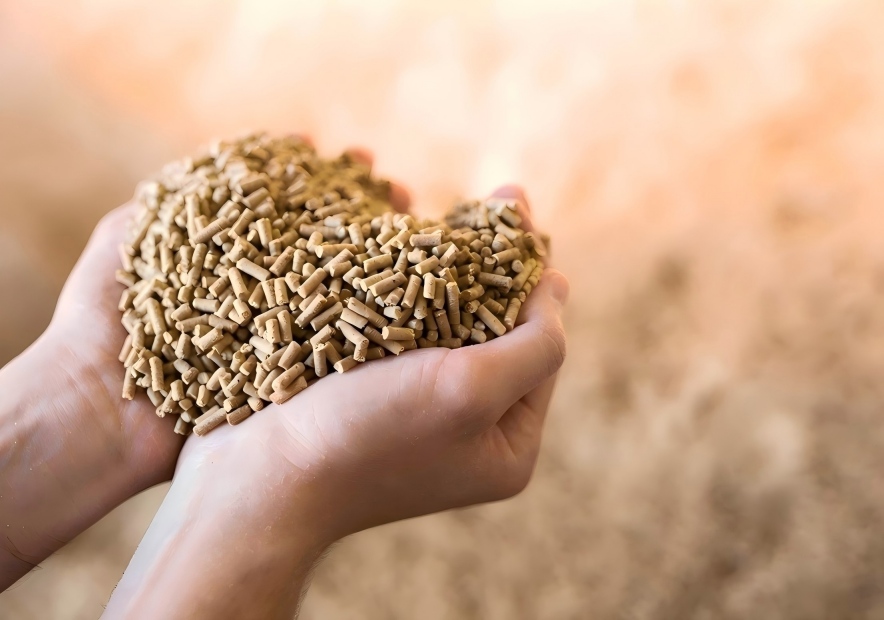
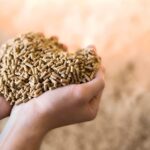
Poultry feed pellets are an important form of feed used in modern chicken farming. Compared with mash feed, pellets are easier to transport, store, handle, and distribute. They can also help reduce feed waste and ingredient separation while providing poultry with a more consistent mixture of nutrients.
But what exactly is the process of making poultry feed pellets? What raw materials are used, what equipment is required, and how does a complete poultry feed production line convert grains, protein meals, minerals, and additives into finished pellets?
The poultry feed pellet production process generally includes raw material receiving, cleaning, crushing, batching, mixing, conditioning, pelleting, cooling, screening, optional crumbling or coating, and packaging. Each stage has a specific purpose and directly influences the quality, durability, nutritional consistency, and storage stability of the final feed.
This article explains the complete process of making poultry feed pellets step by step and introduces the role of the chicken feed pellet machine in commercial poultry feed production.
1. Selecting Raw Materials for Poultry Feed
The first step in making poultry feed pellets is selecting appropriate raw materials. Poultry require a balanced diet containing energy, protein, amino acids, minerals, vitamins, and other nutrients. The exact formula depends on the type and growth stage of the poultry.
Common ingredients include:
- Corn
- Wheat
- Sorghum
- Barley
- Rice bran
- Wheat bran
- Soybean meal
- Rapeseed meal
- Fish meal
- Meat and bone meal
- Vegetable protein sources
- Limestone
- Dicalcium phosphate
- Salt
- Vitamin and mineral premixes
- Feed additives
Corn is frequently used as a major energy source, while soybean meal is widely used as a protein source. Wheat bran and rice bran can contribute energy, protein, fiber, and other nutrients.
However, there is no universal poultry feed formula. Broilers, layers, chicks, breeders, and other poultry have different nutritional requirements.
For example, broiler starter feed generally requires sufficient protein and amino acids to support rapid muscle development. Layer feed needs adequate calcium and phosphorus to support eggshell production. Chick feed usually requires smaller particles and a nutrient profile suitable for early growth.
Therefore, the first consideration when establishing a poultry feed plant should be the intended feed products and their formulations.
2. Raw Material Receiving and Storage
After the raw materials are selected, they are transported to the feed mill.
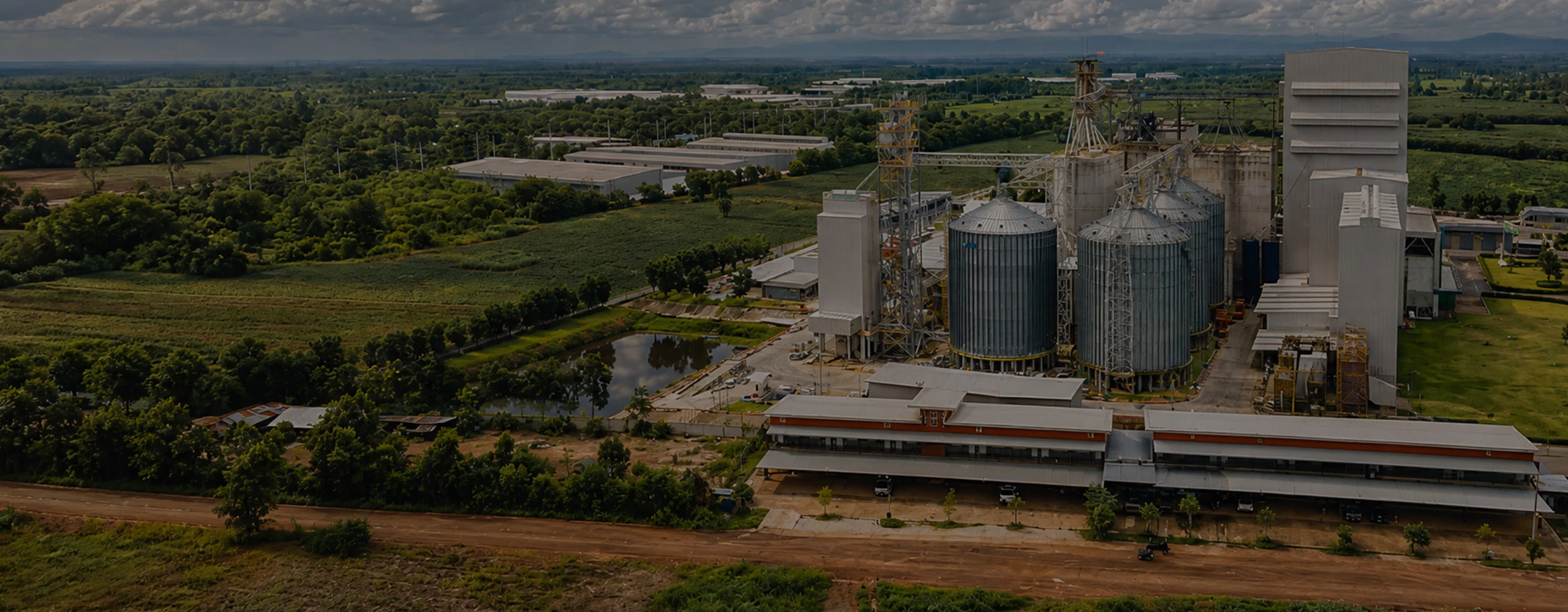
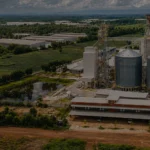
Large-scale poultry feed plants normally have dedicated receiving systems for bulk ingredients. Raw materials may be delivered by truck and transferred to silos, storage bins, or warehouses.
Proper storage is important because feed ingredients can deteriorate if exposed to excessive moisture, heat, pests, or contamination.
Different ingredients should be stored according to their characteristics. Grains may be stored in silos, while protein meals and additives can be stored in bags or dedicated bins.
The storage system should also make it easy to transfer materials to the cleaning, crushing, batching, and mixing sections.
Good raw material management helps maintain stable feed quality throughout the production process.
3. Cleaning the Raw Materials
Raw materials may contain stones, dust, metal particles, strings, soil, husks, and other unwanted materials.
These impurities should be removed before the ingredients enter the main processing equipment.
A typical poultry feed plant may use:
- Rotary screens
- Vibrating screens
- Magnetic separators
- Pre-cleaners
- Dust collection systems
Screens remove larger foreign materials, while magnetic separators are used to remove ferrous metal particles.
Cleaning not only improves feed hygiene but also protects expensive equipment such as hammer mills, mixers, pellet mills, and conveyors.
A well-designed cleaning system can therefore reduce equipment damage, maintenance requirements, and production interruptions.
4. Crushing the Raw Materials
After cleaning, ingredients that require size reduction are sent to a crushing machine.
A hammer mill is commonly used in poultry feed production. It uses high-speed hammers and screens to reduce the particle size of grains and other feed ingredients.
Particle size is important because it affects:
- Feed mixing uniformity
- Pellet quality
- Pellet durability
- Energy consumption
- Feed intake
- Digestibility
Poultry generally benefit from relatively fine feed particles compared with many livestock species. However, grinding the material excessively fine can increase energy consumption and dust generation.
Therefore, the grinding screen should be selected according to the feed formula, poultry age, and required pellet size.
For commercial production, the grinding system can also be equipped with aspiration and dust collection equipment to improve working conditions and reduce material loss.
5. Batching the Ingredients
Once the ingredients have been prepared, they need to be accurately measured according to the feed formula.
This stage is called batching or dosing.
A poultry feed formula may contain several major ingredients as well as small quantities of vitamins, minerals, amino acids, and additives. Accurate weighing is essential because the final nutritional composition depends on the proportion of every ingredient.
Modern poultry feed production lines often use automatic batching systems.
The control system determines the required quantity of each ingredient and activates the corresponding weighing equipment. After the ingredients reach their target weights, they are discharged into the next processing stage.
Automatic batching improves production accuracy and reduces the amount of manual labor required.
For micro-ingredients, specialized dosing systems can be used because these ingredients are often included at very low rates.
6. Mixing the Feed Ingredients
After batching, the ingredients must be thoroughly mixed.
The objective of mixing is to distribute every ingredient evenly throughout the feed mixture.
This is particularly important for vitamins, minerals, amino acids, and other micro-ingredients. Even if they represent only a small percentage of the formula, they must be distributed uniformly.
Common feed mixers include:
- Paddle mixers
- Ribbon mixers
- Horizontal mixers
- Vertical mixers
For commercial feed factories, horizontal paddle or ribbon mixers are commonly selected because they can achieve efficient mixing within a relatively short period.
Liquid ingredients such as vegetable oil can also be added during mixing when required by the formula.
A properly mixed feed provides a more uniform material for the subsequent pelleting process.
7. Conditioning Before Pelleting
Conditioning is one of the most important preparation stages before pellet formation.
After mixing, the feed material enters a conditioner where steam may be added. The steam increases the temperature and moisture content of the mixture and helps soften the raw materials.
Proper conditioning can improve:
- Pellet durability
- Pellet mill capacity
- Starch gelatinization
- Feed digestibility
- Production efficiency
- Pellet appearance
The appropriate conditioning parameters depend on the feed formula.
Different poultry feed formulas may respond differently to heat and moisture. Therefore, commercial feed plants should optimize conditioning according to the actual ingredients rather than using identical settings for all products.
For some feed products, multiple conditioning stages can be used when higher processing intensity is required.
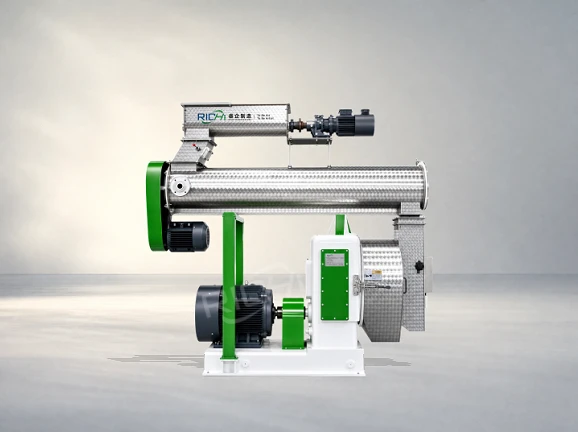
8. Pelleting with a Chicken Feed Pellet Machine
Pelleting is the core process of making poultry feed pellets.
After conditioning, the prepared feed mixture enters the chicken feed pellet machine.
https://pelletisingmachine.com/chicken-feed-pellet-making-machine
Inside the pellet mill, rollers press the feed material against a die. The pressure forces the material through small holes in the die, forming continuous cylindrical strands. A cutting knife then cuts these strands into pellets of the required length.
The basic working principle can be summarized as:
Mixed Feed → Conditioning → Compression → Extrusion Through Die Holes → Cutting → Poultry Feed Pellets
The pellet die determines the diameter of the finished pellets. Different die hole diameters can be selected for different poultry feed products.
For example, younger chicks generally require smaller feed particles, while older broilers and layers can consume larger pellets.
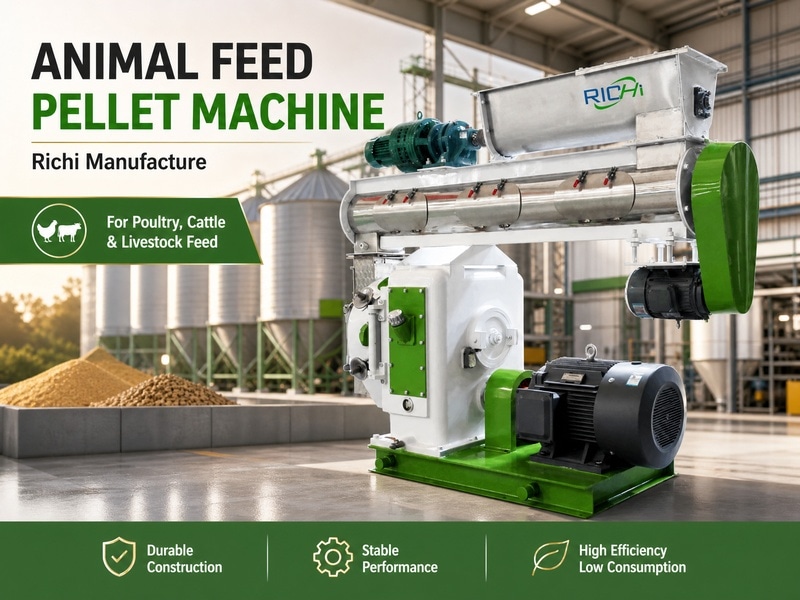
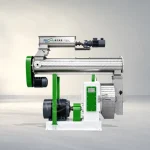
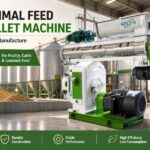
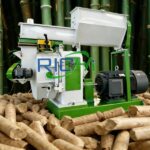
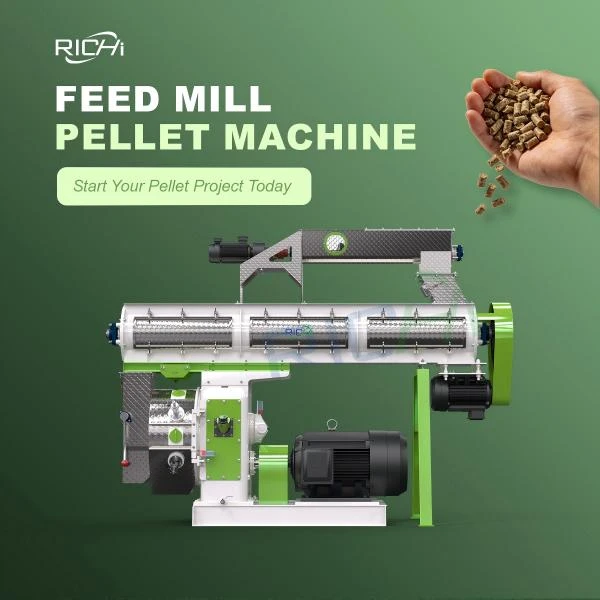
A commercial chicken feed pellet machine normally consists of several key components, including the feeding system, conditioner, pelletizing chamber, ring die, rollers, transmission system, motor, and discharge system.
The ring die and rollers are especially important because they directly determine how the feed is compressed and formed.
A suitable pellet machine should be selected according to the target production capacity, feed formula, pellet diameter, raw material characteristics, and operating conditions.
9. Controlling Pellet Quality
Producing pellets is not simply a matter of forcing feed through a die. The operating parameters need to be controlled carefully.
Important factors include:
Moisture
The moisture level of the feed entering the pellet mill affects pellet formation and durability. Excessive moisture can make pellets difficult to cool and store, while insufficient moisture can reduce pellet quality.
Temperature
Conditioning temperature affects the physical properties of the feed material and can influence starch gelatinization.
Die Compression Ratio
Different feed formulas require different die configurations. The appropriate compression ratio depends on raw material characteristics and pellet specifications.
Roller Adjustment
The gap between the rollers and die should be properly adjusted to maintain stable pelleting.
Feed Rate
The feeding system should provide a stable and continuous flow of material. Excessive feeding can overload the pellet mill, while insufficient feeding can reduce production efficiency.
Careful control of these factors helps produce pellets with consistent size, strength, and appearance.
10. Cooling the Fresh Pellets
Fresh pellets leaving the pellet mill are hot and usually contain more moisture than is desirable for long-term storage.
They therefore need to be cooled and stabilized.
A counterflow pellet cooler is commonly used in commercial poultry feed plants.
The cooling process gradually reduces pellet temperature and moisture by passing air through the pellets.
Effective cooling helps:
- Prevent condensation
- Improve storage stability
- Reduce mold risk
- Increase pellet hardness
- Prepare pellets for screening
- Protect packaging quality
Cooling must be properly controlled because packaging pellets that are still too hot can result in condensation inside the bags.
11. Screening the Pellets
After cooling, the pellets are sent to a screening machine.
The screening process separates qualified pellets from fines and irregular particles.
The fines can often be returned to the pellet mill for reprocessing. This reduces raw material waste and improves overall production efficiency.
Screening also gives the finished product a more consistent appearance.
For commercial poultry feed manufacturers, controlling the percentage of fines is particularly important because excessive powder can reduce product quality and increase feed losses during transportation and handling.
12. Crumbling Poultry Feed Pellets
Not all poultry feed is sold as standard pellets.
Young chicks may require smaller particles that are easier to consume. In this case, finished pellets can be processed through a feed crumbler.
The typical process is:
Pelleting → Cooling → Crumbling → Screening
The crumbler breaks pellets into smaller particles while maintaining relatively uniform sizes.
This allows one production line to manufacture several types of poultry feed products.
For example, a factory may produce starter crumble for chicks and standard pellets for older broilers using the same basic production system.
13. Coating the Pellets
Some poultry feed formulas require additional liquid ingredients to be applied after pelleting.
A coating machine can spray oil or other suitable liquid ingredients onto the pellet surface.
Post-pellet coating can be useful when manufacturers want to add ingredients that may not be ideal for exposure to high temperatures during conditioning and pelleting.
The coating system should distribute liquid evenly across the pellets.
Proper coating control helps prevent excessive surface moisture and maintains the physical stability of the finished feed.
14. Packaging the Finished Poultry Feed
Once the pellets have been cooled, screened, and optionally coated or crumbled, they can be packaged.
Automatic packaging machines can weigh the finished product and fill bags according to preset weights.
Typical commercial packaging may include smaller bags for retail markets and larger bags for poultry farms and distributors.
After packaging, finished feed should be stored in a dry and clean warehouse.
The warehouse should be protected against excessive humidity, rain, pests, direct sunlight, and other contamination sources.
Good storage management helps preserve pellet quality and nutritional value.
Complete Poultry Feed Pellet Production Process
The complete process can be summarized as follows:
Raw Material Receiving → Cleaning → Crushing → Batching → Mixing → Conditioning → Pelleting → Cooling → Screening → Crumbling/Coating → Packaging
Not every poultry feed factory requires every process. The final equipment configuration depends on the feed products, raw materials, production capacity, automation requirements, and investment budget.
For example, a small farm may use a simple feed mixing and pelleting system, while a large commercial feed mill may require a fully automated production line with silos, cleaning equipment, hammer mills, computerized batching, mixers, conditioners, pellet mills, coolers, screening systems, packaging machines, and centralized control.
What Equipment Is Needed for Poultry Feed Pellet Production?
A complete poultry feed production line may include the following equipment:
| Process | Main Equipment |
|---|---|
| Raw material receiving | Intake hopper and conveyors |
| Cleaning | Pre-cleaner, screen, magnetic separator |
| Crushing | Hammer mill |
| Batching | Automatic weighing system |
| Mixing | Feed mixer |
| Conditioning | Steam conditioner |
| Pelleting | Chicken feed pellet machine |
| Cooling | Counterflow pellet cooler |
| Screening | Vibrating or rotary screener |
| Crumbling | Feed crumbler |
| Coating | Pellet coating machine |
| Packaging | Automatic weighing and packing machine |
The equipment can be customized according to the production requirements of the feed factory.
How to Improve Poultry Feed Pellet Production Efficiency
Several factors can help improve production efficiency.
Use Appropriate Raw Materials
Stable raw material quality makes it easier to control the pelleting process.
Optimize the Feed Formula
A balanced formula can improve both nutritional quality and pelletability.
Control Grinding Size
Consistent particle size improves mixing and pellet formation.
Improve Mixing Uniformity
Poor mixing can result in nutritional inconsistency and uneven pellet quality.
Optimize Conditioning
Correct steam addition, temperature, and moisture help improve pellet durability and production efficiency.
Maintain the Pellet Machine
Regular inspection of the die, rollers, bearings, lubrication system, and transmission components helps reduce unexpected downtime.
Control Pellet Cooling
Efficient cooling is essential for producing pellets suitable for storage and packaging.
Why Pelletized Poultry Feed Is Widely Used
Poultry feed pellets offer several advantages over conventional mash feed.
1. Reduced Feed Waste
Pellets are less likely to be blown away or separated during feeding.
2. Better Feed Handling
Pellets are easier to transport, store, and distribute.
3. Improved Nutritional Consistency
Ingredients are mixed before pelleting, reducing the possibility of poultry selectively consuming individual ingredients.
4. Better Production Efficiency
Pelleting allows feed factories to manufacture standardized products at commercial scale.
5. Convenient Automated Feeding
Pellets can work well with modern automatic feeding systems used on large poultry farms.
How to Build a Poultry Feed Pellet Production Line
When planning a poultry feed plant, purchasing individual machines is only one part of the project.
The entire production process should be designed around the customer’s actual requirements.
Important considerations include:
- Target production capacity
- Poultry species
- Feed formulas
- Raw material availability
- Required pellet diameter
- Degree of automation
- Factory building dimensions
- Electricity and steam availability
- Packaging requirements
- Investment budget
- Future production expansion
For example, a 2 T/H poultry feed plant has different equipment requirements from a 20 T/H commercial feed factory. Similarly, a factory producing broiler pellets, layer pellets, and chick crumbles may require more flexible processing equipment than a plant producing only one type of feed.
A professional engineering team can analyze these requirements and develop an appropriate process flow and equipment configuration.
RICHI Poultry Feed Pellet Solutions
RICHI Manufacture provides poultry feed production equipment and customized turnkey solutions for customers who want to establish or upgrade poultry feed factories.
A complete solution can include process design, equipment manufacturing, factory layout planning, transportation, installation, commissioning, operator training, and after-sales technical support.
Depending on the customer’s requirements, the production line can integrate raw material cleaning, crushing, batching, mixing, conditioning, pelleting, cooling, screening, crumbling, coating, and packaging systems.
The chicken feed pellet machine can also be selected according to the desired capacity, feed formula, pellet diameter, and production conditions.
For customers planning a new poultry feed plant, a customized turnkey solution can simplify equipment coordination and help ensure that different sections of the production line work together efficiently.
Conclusion
The process of making poultry feed pellets involves a series of interconnected steps. Raw materials must first be selected, cleaned, crushed, accurately batched, and thoroughly mixed. The prepared feed is then conditioned before entering the pellet mill, where pressure and a specially selected die convert the mixture into compact pellets.
After pelleting, the hot pellets must be cooled and screened. Depending on the final product, they may also be crumbled or coated before being weighed and packaged.
The chicken feed pellet machine is the central piece of equipment in this process, but pellet quality depends on the entire production system. Raw material quality, formula design, particle size, mixing uniformity, conditioning, die selection, cooling, screening, and equipment maintenance all contribute to the final result.
Whether the goal is to produce feed for a small poultry farm or establish a large commercial feed factory, the production line should be designed around actual feed formulas, capacity requirements, pellet specifications, and future expansion plans. With the right equipment configuration and process control, poultry feed manufacturers can produce consistent, durable, and nutritionally balanced pellets efficiently.