
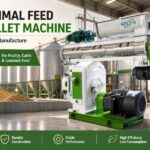
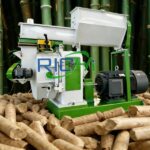
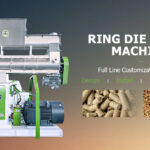
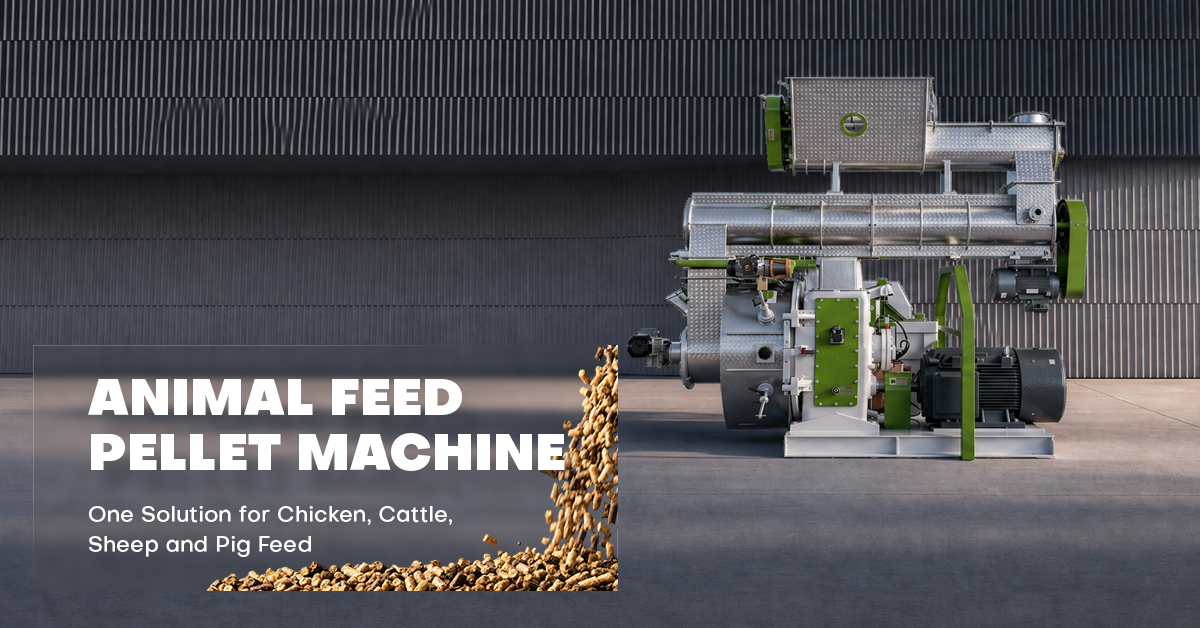
When planning a feed production project, capacity is usually one of the first specifications discussed.
Buyers often compare machines according to tons per hour and naturally assume that higher output means better business potential.
But the relationship is not that simple.
A larger feed mill can produce more feed, but it also requires more raw materials, greater investment, larger storage, higher electrical capacity, and potentially more complex management.
The real question is not:
“How much can the machine produce?”
It is:
“How much feed can the business realistically sell or consume?”
Understanding this difference can help feed producers select equipment more rationally.
Capacity Should Follow Demand
Imagine a livestock cooperative requires 10 tons of feed every day.
A small feed production system may be able to meet that demand comfortably.
Installing a system designed to produce 10 tons every hour would create a significant mismatch.
The machine may remain idle for most of the day, while the business still pays for the larger facility, electrical system, storage, and maintenance.
A smaller plant with higher utilization may actually be more economical.
Capacity should therefore begin with demand forecasting.
The Four Numbers Every Buyer Should Calculate
Before selecting equipment, determine:
Daily feed demand
Operating hours per day
Operating days per year
Expected future growth
Suppose a business needs 20 tons per day and plans to operate eight hours.
The average required production rate is:
20 ÷ 8 = 2.5 tons per hour
That does not mean the buyer should immediately purchase a 2.5 T/H machine.
Additional considerations include downtime, cleaning, maintenance, product changeovers, and seasonal demand.
A practical production target may need some additional capacity.
Why Utilization Matters
Machine utilization measures how much of the available production capacity is actually used.
A 5 T/H machine operating at 30% utilization may produce less annually than a 2 T/H machine operating near its practical capacity.
Low utilization can result from:
- Insufficient raw materials
- Weak market demand
- Seasonal production
- Frequent product changes
- Maintenance downtime
- Poor scheduling
Therefore, buyers should consider annual output rather than hourly capacity alone.
Rabbit Feed as a Capacity Example
Rabbit feed production illustrates the importance of matching capacity to market size.
A farm cooperative serving a regional rabbit industry may need only a moderate amount of feed each day.
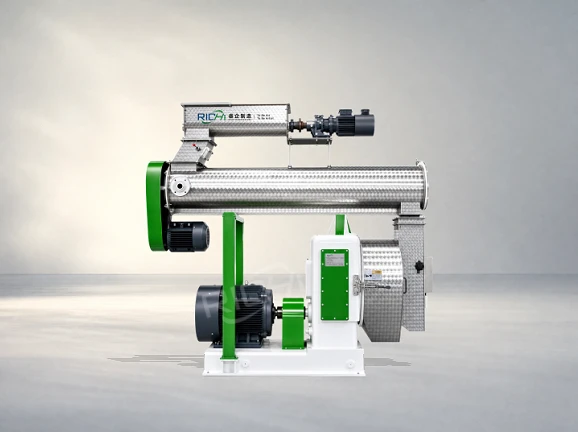
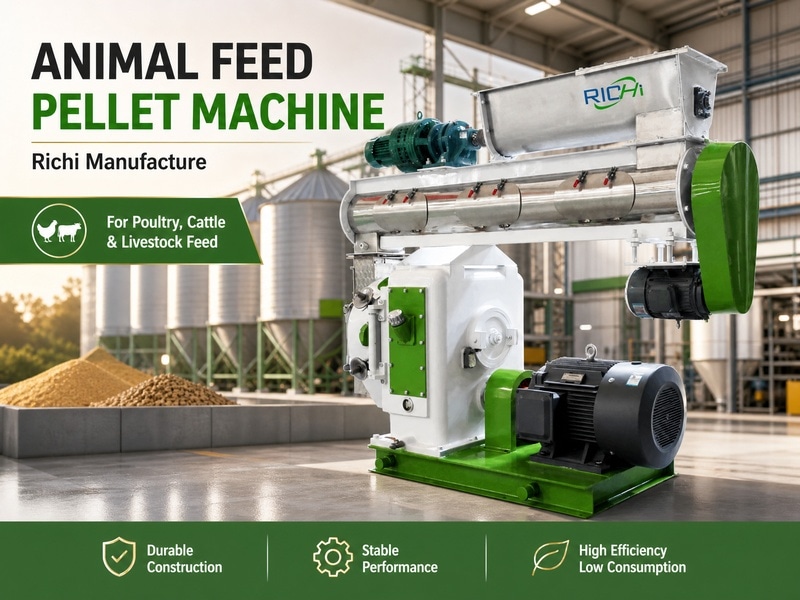
A 1-2 T/H rabbit pellet machine for sale can potentially match such requirements better than a much larger industrial system.
The actual choice depends on the number of animals, feeding rate, working schedule, and whether the factory sells feed commercially.
The same principle applies to any livestock feed.
Alfalfa Feed Production
Alfalfa is another example where capacity must be connected to raw-material supply.
If a farm produces its own alfalfa, the annual quantity of usable forage provides a natural limit to production.
A 3-4 T/H alfalfa pellet mill for sale may be suitable for a commercial operation with sufficient forage availability.
But if the factory can only obtain a few hundred tons of alfalfa annually, such capacity may be excessive.
Raw-material supply should therefore be calculated before equipment size is finalized.
Goat Feed and Regional Demand
Goat farming can be highly concentrated in certain regions.
A feed factory serving a local goat industry may have strong demand for formulated pellets.
A 2-3 T/H goat feed pellet making machine for sale could be appropriate for a medium-scale operation with a stable customer base.
But the business should estimate the total addressable market.
If the region only requires a limited amount of commercial goat feed, a larger plant may struggle to maintain utilization.
The Cost of Oversizing
Oversizing affects more than purchase price.
A larger facility may require:
- Larger buildings
- More electrical capacity
- Larger storage
- More conveyors
- More cooling capacity
- More packaging equipment
- More maintenance
- More operators
Even if the pellet mill itself is reasonably priced, the total project investment can increase significantly.
This is why buyers should calculate total project cost rather than comparing the price of the main machine alone.
The Hidden Cost of Undersizing
Undersizing can also create problems.
If demand grows rapidly and the plant cannot keep up, customers may experience delays.
The factory may need overtime operation, which can increase labor and maintenance costs.
Production bottlenecks can also appear in mixing, cooling, packaging, or storage.
Therefore, the ideal capacity is usually not the smallest possible machine.
There should be enough room for reasonable growth.
A Better Strategy: Planned Expansion
One solution is to design a plant for staged expansion.
For example:
Phase 1: 2 T/H
Phase 2: Additional pelletizing capacity
Phase 3: Larger storage and packaging
This approach allows investment to follow actual market development.
However, the initial facility should leave sufficient space and infrastructure for future expansion.
Electrical systems, building layouts, conveyors, and storage areas can be designed with expansion in mind.
Why Raw Materials Affect Capacity
Capacity is not determined only by the pellet mill.
Different feed formulas have different processing characteristics.
High-fiber materials may behave differently from grain-based formulas.
Moisture also affects throughput.
For this reason, quoted capacity should be discussed using the actual feed formula and raw-material conditions.
A supplier’s maximum theoretical capacity may not represent the real production rate under every operating condition.
Industrial Feed Production Requires Balanced Equipment
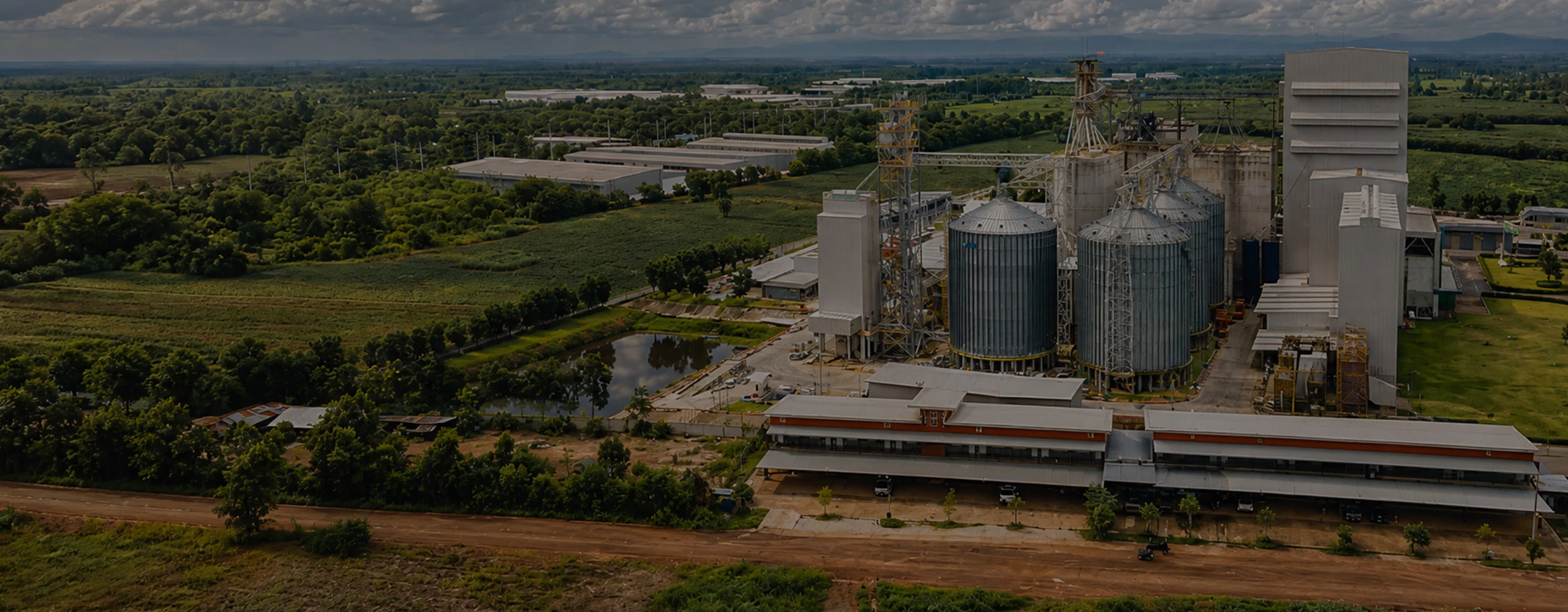
A factory is not a single machine.
It is a chain.
Grinding → Batching → Mixing → Pelletizing → Cooling → Screening → Packaging
If one stage is undersized, the entire plant can become constrained.
For example, an oversized pelletizer connected to a small mixer will spend time waiting for material.
An oversized pelletizer with an undersized cooler can create downstream accumulation.
A high-capacity system with slow packaging can also create finished-product bottlenecks.
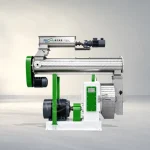
This is why pellet mill for sale comparisons should include the complete process rather than only the pelletizing machine.
Energy Consumption and Capacity
Higher capacity usually means higher installed power.
But the relationship between power and output depends on material and process conditions.
Grinding can consume significant electricity, while drying can add fuel costs.
Pelletizing itself is also energy-intensive.
Therefore, energy efficiency should be evaluated per ton of finished feed.
A plant producing more tons per hour may have better efficiency if it maintains stable operation, but only if there is enough demand to utilize the capacity.
Labor Requirements
Automation can reduce the number of operators required per ton of feed.
However, larger factories may still require skilled personnel for:
- Quality control
- Maintenance
- Electrical systems
- Production management
- Warehouse operations
Labor planning should therefore be included in the project economics.
A highly automated system may require fewer routine operators but greater technical expertise.
Storage Becomes More Important as Capacity Grows
A factory producing 3 T/H for eight hours creates 24 tons of feed per day.
That feed needs somewhere to go.
Finished-product storage must be large enough to prevent packaging and shipping from interrupting production.
Raw-material storage also needs to support continuous operation.
This is especially important for seasonal materials such as alfalfa and other forage products.
A high-capacity pelletizer without adequate storage is unlikely to deliver its theoretical production potential.
Packaging Can Become the Bottleneck
Packaging is often treated as a final detail.
In reality, it can determine plant throughput.
If the pellet mill produces faster than bags can be filled, weighed, sealed, and moved, finished pellets will accumulate.
A commercial plant may therefore require automatic packing systems.
Bulk loading can be another option for large customers.
Packaging should be selected according to the target market.
Why Flexibility Can Be More Valuable Than Maximum Capacity
Suppose a factory serves three markets:
- Rabbit feed
- Goat feed
- Alfalfa pellets
Demand varies throughout the year.
A flexible system may allow the factory to shift production between products.
This can create higher annual utilization than a specialized high-capacity machine dedicated to one product.
Flexibility can include:
- Multiple die sizes
- Adjustable feeding
- Recipe management
- Separate storage
- Automated control
- Efficient product changeovers
The result can be a more adaptable business.
What Should Buyers Ask Suppliers?
When reviewing equipment proposals, ask:
- What capacity is expected with my actual feed formula?
- What raw-material moisture is assumed?
- What pellet diameter is being used for the capacity estimate?
- What auxiliary equipment is included?
- What is the recommended operating schedule?
- How much storage is required?
- What electrical load is expected?
- What future expansion options are available?
These questions can reveal whether the proposal is based on realistic project conditions.
The Role of Automation
Automation can help maintain stable production at larger capacities.
It can control:
- Feeding
- Batching
- Mixing
- Pelletizing
- Cooling
- Packaging
It can also provide alarms and production records.
The value of automation increases as production becomes more complex.
For small farms, manual operation may still be practical.
For commercial plants producing multiple formulas every day, automation can become an important part of quality management.
A Practical Capacity Planning Formula
A simple planning method is:
Required hourly output = Annual feed demand ÷ annual operating hours
Then adjust for:
- Maintenance
- Product changeovers
- Seasonal fluctuations
- Expected growth
- Downtime
This provides a more realistic starting point than simply choosing a machine based on its maximum rated capacity.
When Does a Larger Plant Make Sense?
A larger plant becomes attractive when several conditions are present:
Reliable raw-material supply
Strong customer demand
High annual utilization
Efficient logistics
Available investment capital
Suitable infrastructure
If these conditions are absent, a smaller system may offer a better balance of risk and opportunity.
Final Thoughts
The biggest feed mill is not necessarily the most profitable.
Profitability depends on utilization, feed demand, raw-material cost, energy consumption, labor, maintenance, storage, transportation, and selling price.
A properly sized pelleting machine can produce stable output without forcing the business to carry unnecessary investment.
For larger projects, look at this website can also be useful when researching different feed-processing configurations and comparing equipment approaches.
The best strategy is to start with the market, calculate realistic demand, evaluate available raw materials, and then select the equipment.
Capacity should support the business—not define it.
A well-sized feed factory can grow with demand, maintain better utilization, and reduce unnecessary operating costs. That is often more valuable than simply owning the largest machine in the region.
(Related Post: https://www.richipelletmill.com/chicken-feed-pellet-machine-for-sale/)