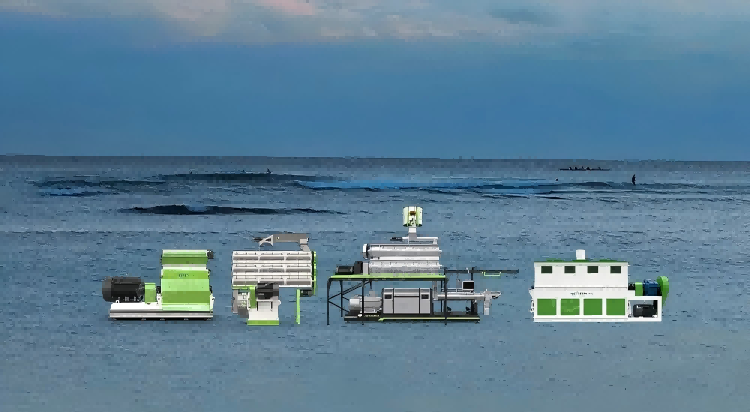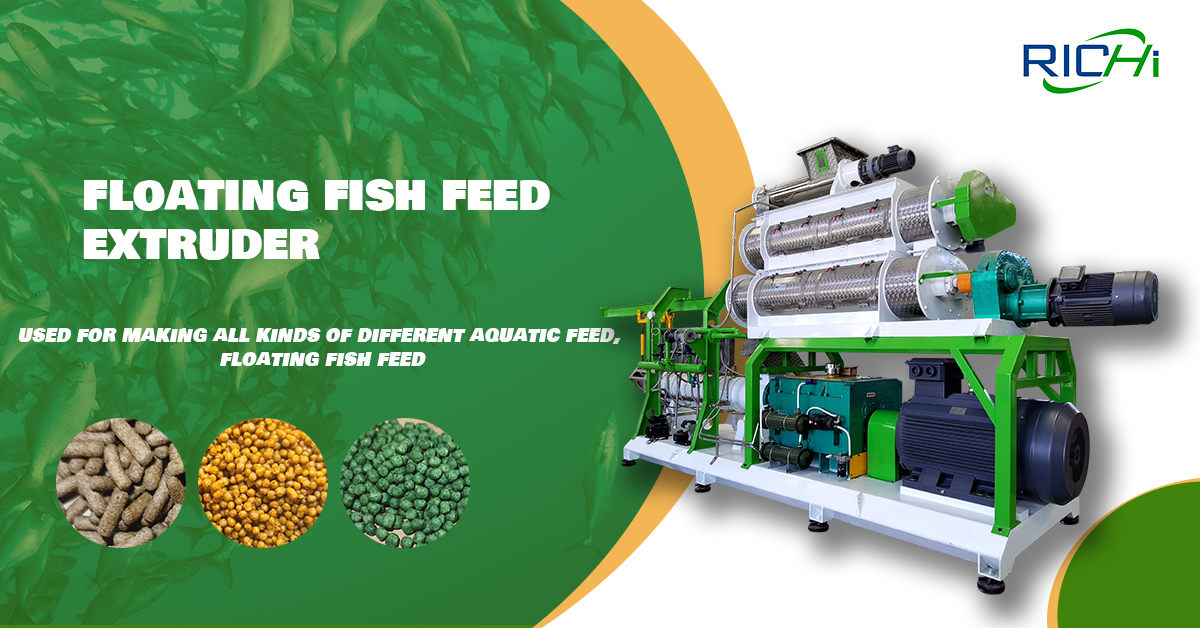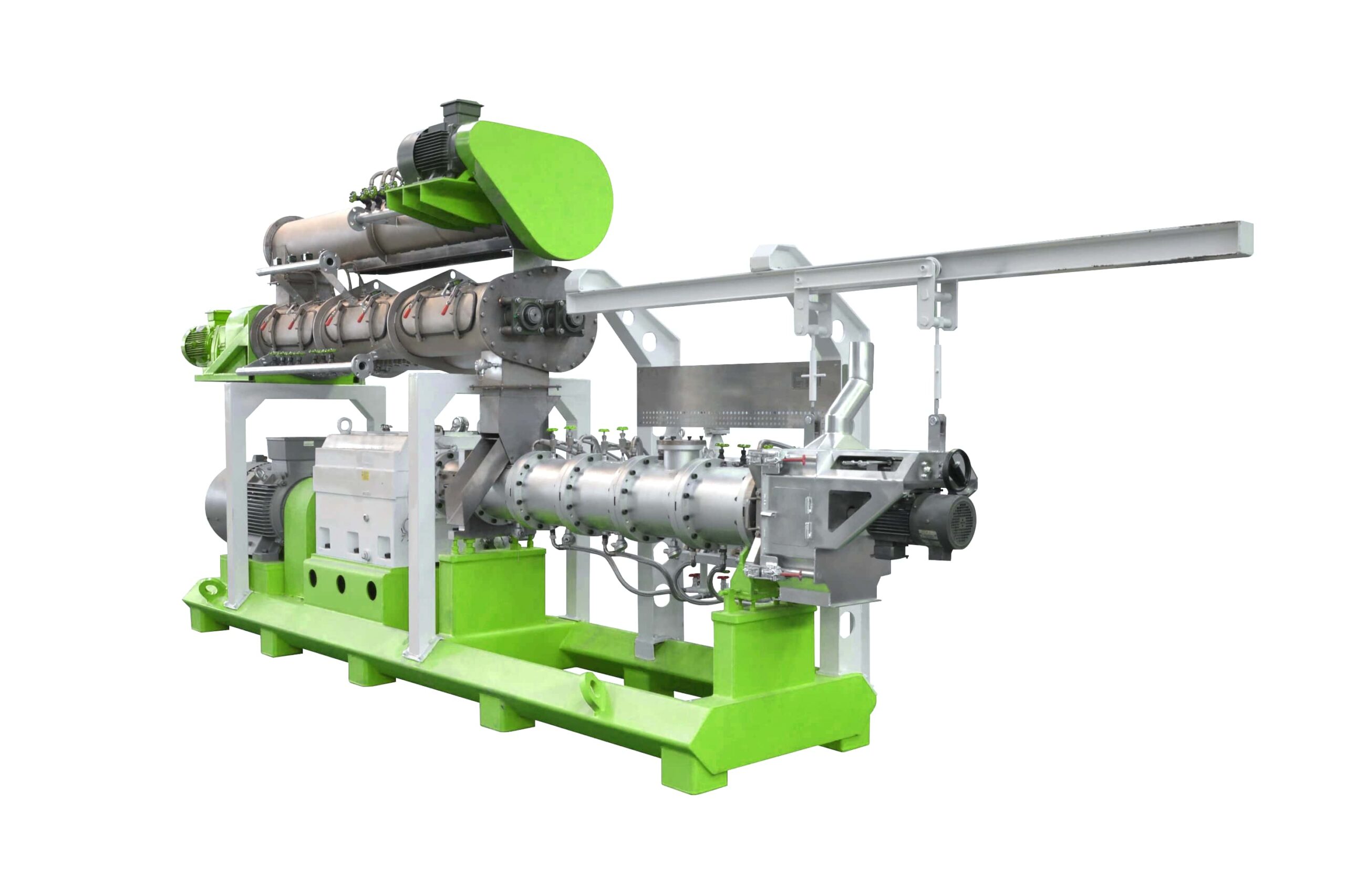

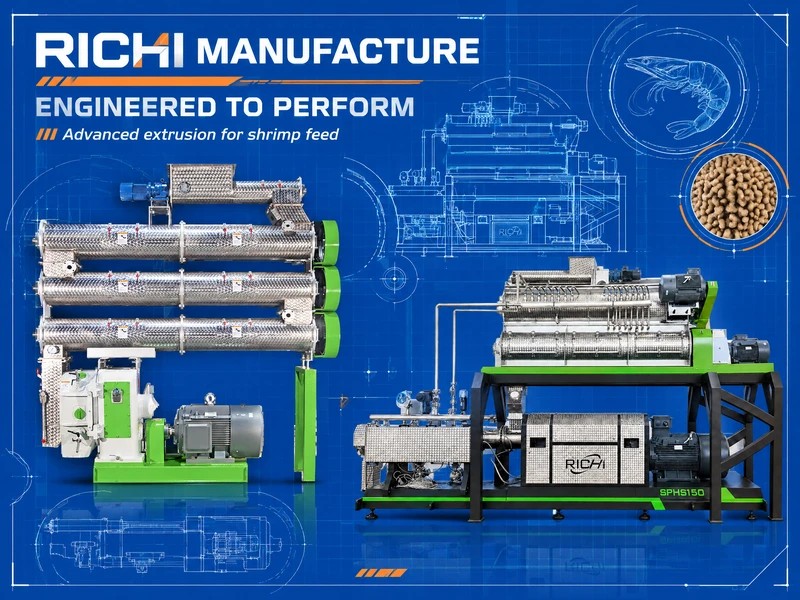
A successful aquatic feed factory begins with process design. Before purchasing equipment, the investor needs to understand what happens to the raw materials at every stage and how each machine contributes to the final product. The shrimp feed pellet machine is a central forming unit, but it depends on a sequence of upstream and downstream processes.
Grinding Creates the Starting Point
The physical condition of raw materials has a direct relationship with pellet formation. Fish meal, soybean meal, grains, and other ingredients may arrive in different particle sizes.
A grinding system reduces these materials to a more suitable size. For shrimp feed, fine grinding can be especially important because small pellets require an appropriate raw material structure.
The grinding process should therefore be selected according to the formulation rather than simply choosing the highest-capacity grinder available.
Mixing Builds Formula Uniformity
Once ingredients have been prepared, batching and mixing create a more uniform feed mixture. The objective is to distribute protein sources, grains, additives, vitamins, minerals, and other components throughout the batch.
Mixing equipment can use different mechanical principles, but the desired result is consistent distribution before the material moves toward conditioning.
Conditioning Before Pelleting
Conditioning introduces moisture and heat to prepare the feed mixture for compression. Proper conditioning can improve the physical properties of the material and support pellet formation.
For shrimp feed, water stability is an important product characteristic. The conditioning system therefore needs to be matched with the formulation, target pellet size, and desired physical properties.
Pellet Formation
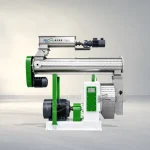
During pelleting, prepared material is compressed through a die. The die determines the general pellet diameter, while the cutter influences pellet length.
Different shrimp growth stages may require different pellet dimensions. Changing the die and adjusting operating conditions can therefore provide flexibility when the factory produces several feed specifications.
The pelleting section should also be designed with maintenance in mind because dies, rollers, cutters, and other wear components require periodic inspection.
Cooling and Screening After Formation
Fresh pellets need to be stabilized before storage. Cooling reduces their temperature and helps manage residual moisture. Screening then separates properly formed pellets from particles that are too large or excessively broken.
A fish feed processing plant needs enough downstream capacity to handle the output of the pellet mill. Otherwise, the pellet mill may be capable of producing more material than the cooler or screen can process.
Material Handling Is Part of Process Design
Conveyors and bucket elevators connect the major production stages. Their capacity and routing should match the production flow.
Poorly planned conveying can create unnecessary transfer points, difficult maintenance areas, or production bottlenecks. Good layout design keeps material moving logically through the factory.
Packaging and Storage
After screening, finished feed can be moved into storage or packaging. Automatic weighing and bagging systems can improve packaging consistency, while appropriate storage conditions help preserve the physical quality of the finished product.
Packaging requirements depend on the target market. Local farms, distributors, and commercial feed customers may have different requirements for bag sizes and handling.
Designing the Whole System
click for more information when comparing processing equipment, but always connect the individual machine to the larger production process. A grinder should match the mixer, the mixer should match the conditioning system, and the pellet mill should match the cooler and screen.
The pellet mill machine is an important part of the system, but its actual productivity depends on how the complete process is balanced.
A process-based approach helps investors avoid buying equipment simply because it has an attractive specification. Instead, every machine is selected because it performs a defined role within the aquatic feed production system.
view details: https://www.richimanufacture.com/shrimp-feed-pellet-machine/