
For decades, poultry manure was viewed primarily as a disposal problem—an inevitable byproduct of production that required management, storage, and application to nearby cropland. The rising costs of transportation, tightening environmental regulations, and growing public scrutiny of agricultural odors have changed this perspective dramatically. Producers who once paid to have manure hauled away are now discovering that processing this material into a marketable product can create a valuable revenue stream while solving environmental challenges.
The Manure Management Challenge in Poultry Operations
Poultry production generates substantial quantities of manure, with a single broiler house producing 50 to 100 tons of litter annually, depending on flock size and management practices. Layer operations produce manure with even higher nutrient concentrations, as the birds are housed in systems that allow efficient collection without the dilution of bedding materials. Across all poultry sectors, the total volume of manure produced in major producing countries amounts to millions of tons each year.
Traditional manure management relies on land application, either as raw manure or after composting. Both approaches have significant limitations. Raw manure must be applied within specific timing windows to avoid nutrient losses and water quality impacts. Composting requires space, equipment, and labor, and the finished product remains bulky and expensive to transport. Both approaches limit the distance manure can be economically moved, concentrating nutrients in areas near production facilities and creating the potential for soil phosphorus accumulation.
Related Post: https://pelletizerextruder.com/poultry-manure-pellet-machine/
Environmental regulations have intensified the pressure on manure management. Many regions have implemented nutrient management plans that restrict application rates based on crop uptake capacity. In areas with high livestock densities, producers face the challenge of finding sufficient land for manure application without exceeding regulatory limits. This constraint has driven interest in processing technologies that reduce manure volume and create products that can be marketed at greater distances.
Transforming Manure Through Densification
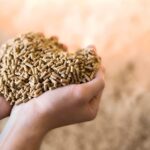
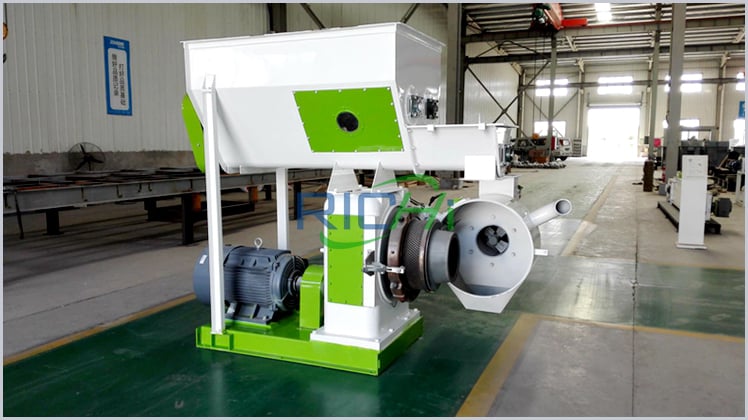
Pelleting offers a solution that addresses multiple challenges simultaneously. The densification process reduces manure volume by 50 to 70 percent, dramatically lowering storage requirements and transportation costs. A poultry manure pellet machine produces a uniform, free-flowing product that can be handled with conventional fertilizer equipment, eliminating the need for specialized spreaders designed for raw manure. The heat generated during processing reduces pathogen loads, creating a product that meets food safety standards for use on food crops.
The agronomic advantages of pelleted manure are substantial. Nutrients are released gradually as the pellets break down in soil, matching plant uptake patterns more closely than raw manure and reducing the risk of nutrient leaching. The uniform particle size ensures even distribution during field application, avoiding the hot spots that can damage crops. Odor is significantly reduced, improving relations with neighboring communities and making the product more acceptable for urban or suburban applications.
Processing Parameters for Poultry Manure
Poultry manure presents distinct processing challenges that require careful equipment selection and operational control. The nutrient content and physical characteristics vary with bird type, production system, and management practices. Broiler litter contains bedding material—typically wood shavings, rice hulls, or peanut shells—that provides fiber and structure but also contributes to variability in moisture content and particle size. Layer manure, collected from belt or high-rise systems, is generally finer and more uniform but may have higher moisture content.
Moisture management is the critical factor in successful manure pelleting. Poultry manure as produced typically contains 25 to 40 percent moisture, with litter-based manure often in the higher end of this range. The moisture content must be reduced to 12 to 15 percent for effective pelleting, requiring either pre-drying or blending with dry materials. Some producers incorporate dried manure, sawdust, or other absorbent materials into the mix to achieve the target moisture level while maintaining nutrient content.
The conditioning process for poultry manure differs from feed pelleting in several respects. The material contains significant ammonia and volatile compounds that must be managed to protect equipment and personnel. Corrosion-resistant materials are essential for components exposed to these compounds. Dust control is a priority, as manure dust can contain pathogens and irritants that require careful handling.
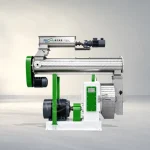
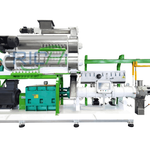
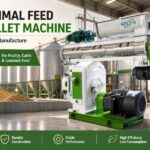
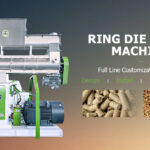
A commercial chicken manure pellet machine must be engineered specifically for these demanding conditions. Features such as variable-speed drives, corrosion-resistant construction, and specialized die designs are essential for reliable operation. The ability to adjust processing parameters to accommodate variations in moisture content and ingredient composition is critical for maintaining consistent pellet quality.
Environmental and Sustainability Benefits
The environmental benefits of manure pelleting extend beyond odor and nutrient management. The processing of manure into stable pellets can reduce greenhouse gas emissions, particularly methane and nitrous oxide that are released during raw manure storage and field application. The concentration and stabilization of nutrients improve their utilization efficiency, reducing the overall nutrient footprint of poultry production. From a circular economy standpoint, manure pellets represent the recycling of nutrients back into crop production, closing the loop between livestock and crop systems.
RICHI Machinery offers a comprehensive approach to manure processing solutions, with expertise spanning multiple manure types and production systems. The robust engineering and durable construction of their equipment meet the challenge of processing abrasive and variable manure feedstocks. The support infrastructure, including plant design, installation supervision, and operator training, helps producers achieve reliable production from the first day of operation.
Beyond Fertilizer: Expanding Market Opportunities
While agricultural fertilizer remains the primary market for pelleted manure, emerging applications are creating additional revenue opportunities. Horticultural markets value the slow-release nutrient characteristics of manure pellets for container plants, turf, and specialty crops. Landscape contractors and golf courses increasingly seek organic fertilizers that reduce runoff risk and support soil health. The retail garden center market offers premium pricing for pelleted manure products packaged in consumer-friendly sizes.
Bioenergy applications represent another growth area. Dried poultry manure has an energy content of approximately 14 to 16 MJ per kilogram, making it suitable for thermal conversion in properly designed combustion or gasification systems. Some operations are integrating manure pelleting with on-farm energy production, using the pellets as fuel for heating broiler houses or generating electricity.
Financial Considerations and Return on Investment
The economics of manure pelleting depend on local conditions, including the cost of alternative manure management, regulatory pressures, and market prices for competing fertilizer products. Producers should evaluate both direct revenue from product sales and indirect benefits such as reduced manure management costs, lower transportation expenses, and improved environmental compliance.
Capital investment requirements vary with production scale and equipment specifications. Smaller systems, suitable for individual farms or small cooperatives, provide entry-level processing capability with modest capital requirements. Larger systems, designed for regional processing facilities or large integrated operations, achieve economies of scale that reduce per-unit production costs. A well-designed poultry manure pellet machine offers the processing capability and operational efficiency needed to generate returns that justify the investment.
Getting Started with Manure Pelleting
For producers considering manure pelleting, a structured approach helps clarify objectives and identify the optimal production system. The first step is to characterize the manure supply: quantity, moisture content, nutrient composition, and variability. This information guides equipment selection and product positioning. Market assessment, including potential customers, competitive products, and price points, clarifies the value proposition and informs marketing strategies. Regulatory review ensures that the planned operation complies with environmental and product quality requirements.
Engaging with experienced equipment suppliers who understand the specific challenges of manure processing is essential for success. The technical complexity of manure pelleting, combined with the variability of feedstocks, demands expertise that general-purpose equipment suppliers may lack. RICHI Machinery offers this specialized knowledge, backed by decades of experience in processing agricultural materials across multiple species and production systems.