



The global search for renewable energy resources has encouraged industries to reconsider materials that were previously treated as waste.
Agricultural residues, forestry by-products, sawdust, crop stalks, and other forms of biomass are increasingly being evaluated for energy applications.
Bamboo deserves a place in this discussion.
It grows rapidly in many climates, can support a wide range of industries, and generates significant residues during harvesting and processing.
The question is no longer simply whether bamboo contains energy.
It does.
The more interesting question is how efficiently that energy can be converted into a standardized fuel product.
Bamboo Is More Than a Construction Material
Bamboo has a remarkably diverse industrial footprint.
It is used for:
- Furniture
- Flooring
- Panels
- Construction
- Household products
- Handicrafts
- Agricultural applications
- Food-related products
Each application creates different forms of residues.
Some operations generate long branches. Others produce chips or sawdust.
This variety creates both opportunities and challenges for biomass processing.
A pellet production system must be designed around the physical form of the available feedstock.
Why Pelletizing Changes the Economics
Loose biomass has several logistical disadvantages.
It takes up considerable space, can be difficult to handle automatically, and may be expensive to transport.
Pelletizing changes the physical characteristics of the material.
Compression produces a denser, standardized fuel that can be easier to transport, store, and feed into compatible combustion systems.
This does not mean every bamboo residue should automatically become pellets.
Economic feasibility depends on transportation costs, moisture, processing requirements, local fuel prices, and equipment utilization.
But where the conditions are favorable, pelletizing can unlock value.
The Journey from Bamboo to Pellet
A typical production route can be represented as:
Bamboo residue → Chipping → Crushing → Drying → Pelletizing → Cooling → Screening → Packaging
Not every project needs every stage.
Dry sawdust may bypass chipping.
Low-moisture feedstock may require limited drying.
Small projects may use simpler packing systems.
The production process should therefore be customized.
The Importance of Chipping
Chipping is particularly important when bamboo arrives as long poles, branches, or large pieces.
The objective is to transform irregular raw material into chips that downstream machinery can handle more consistently.
For projects processing substantial quantities of bamboo, industrial bamboo chipping machine for sale options can provide the initial size reduction required before crushing and pelletizing.
The chipper should be selected based on bamboo diameter, feedstock type, required capacity, and operating conditions.
From Chips to Fine Particles
Chips are generally not the final form required by a pellet mill.
Further crushing may be necessary.
A hammer mill can reduce material into smaller particles and create a more uniform feedstock.
This stage is important because pelletizing works best when the feedstock is prepared appropriately.
However, excessively fine grinding can also increase electricity consumption.
The goal is not to produce the smallest possible particles. The goal is to produce particles suitable for efficient pellet formation.
Moisture and Seasonal Conditions
Bamboo production may occur in regions with significant seasonal variation.
Humidity, rainfall, storage conditions, and harvesting schedules can influence feedstock moisture.
A pellet factory should therefore consider how material changes throughout the year.
A dryer can help stabilize production when moisture rises.
But drying should be based on measured moisture rather than assumptions.
The amount of heat required can vary considerably between batches.
Selecting the Pellet Mill
The pellet mill is the heart of the process.
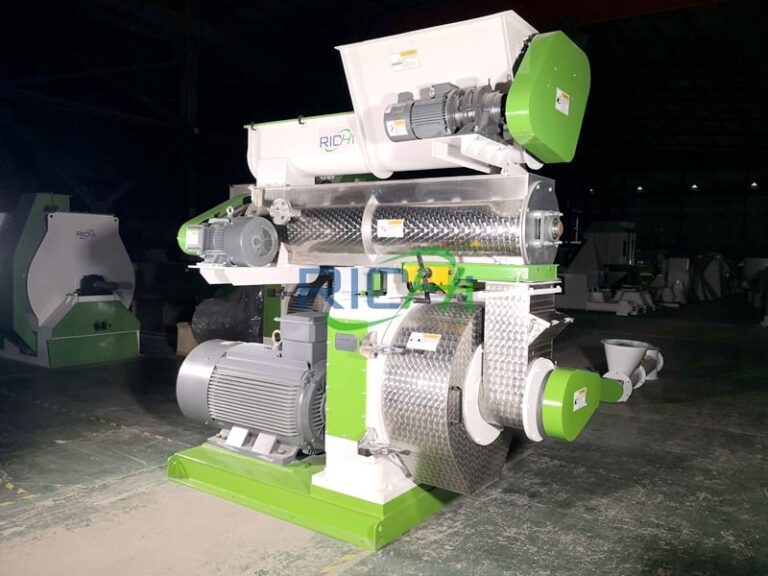
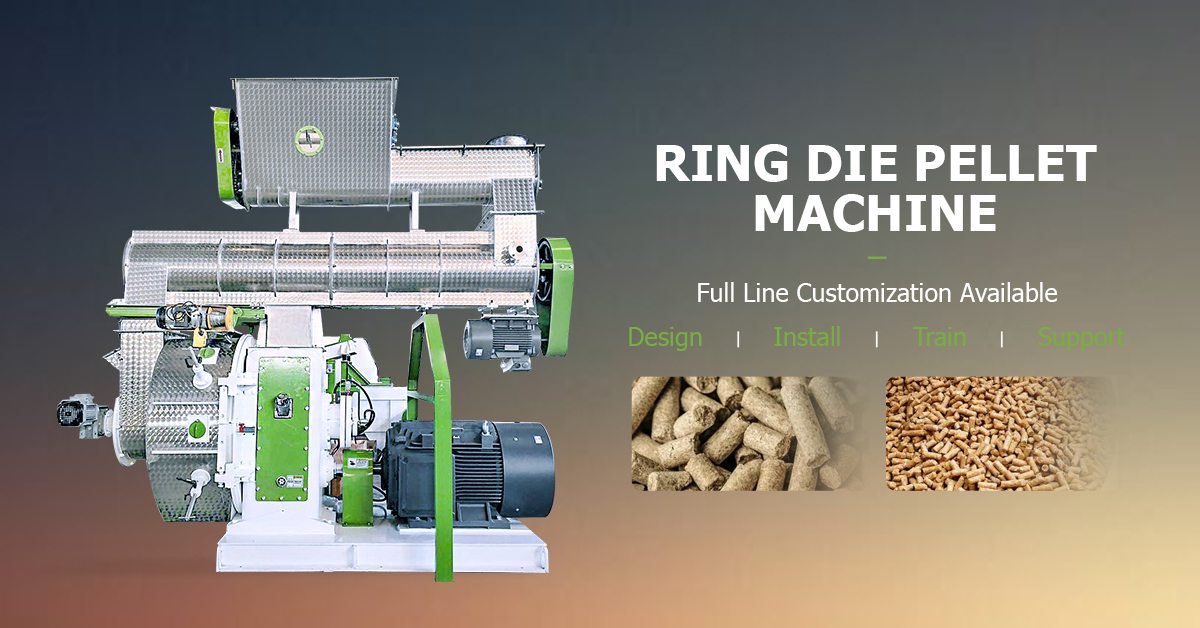
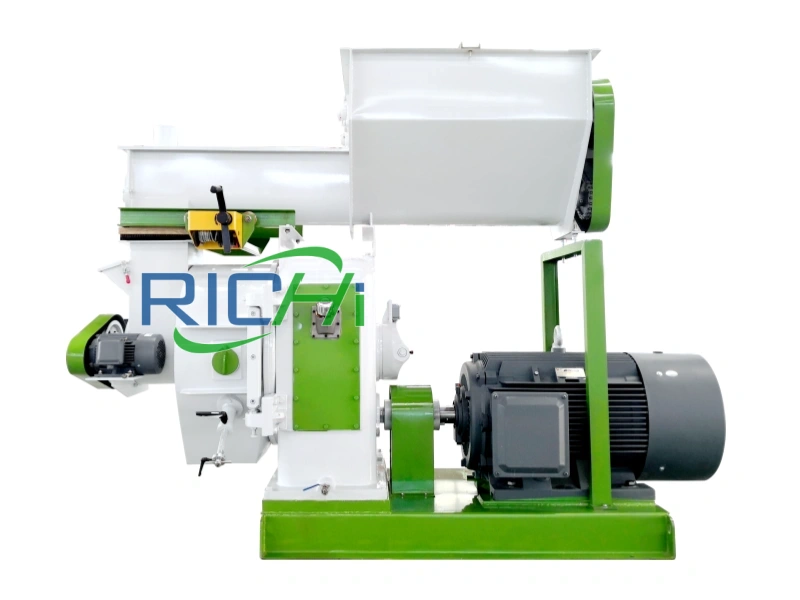
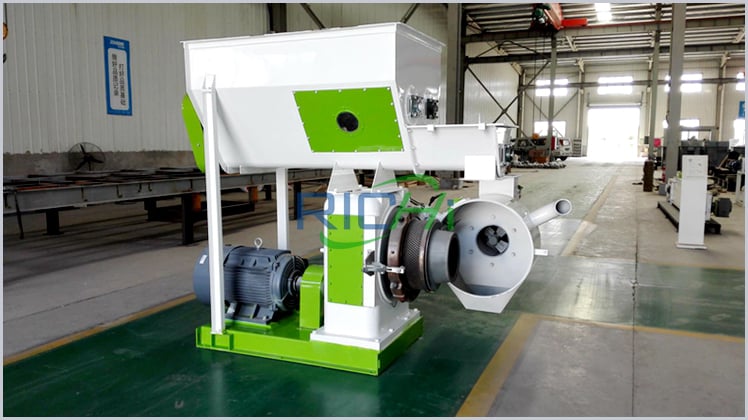
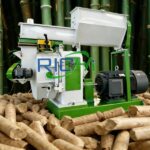
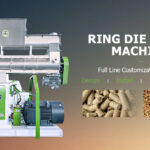
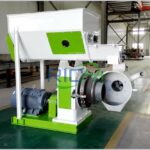
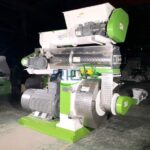
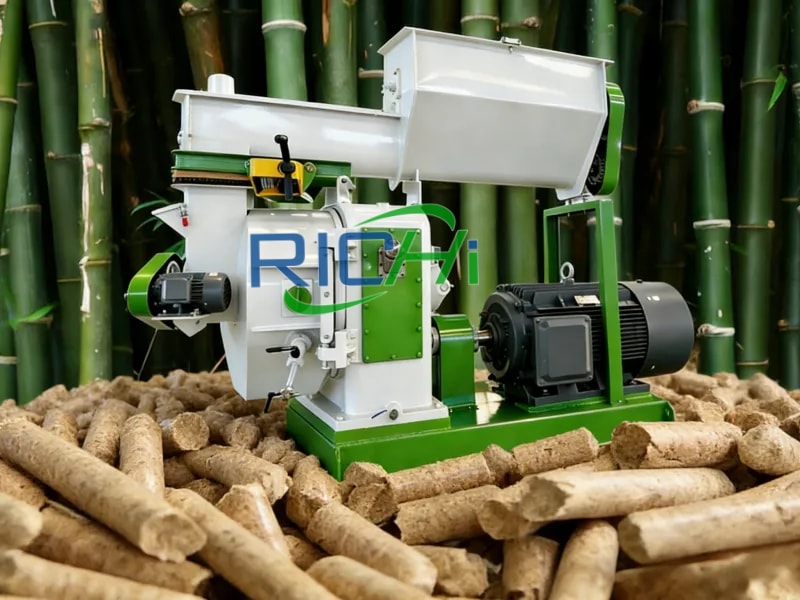
A bamboo pellet mill compresses prepared biomass into cylindrical pellets.
Selection should consider:
- Raw material characteristics
- Required production capacity
- Pellet diameter
- Motor power
- Die configuration
- Operating hours
- Automation
- Maintenance requirements
The best machine is not necessarily the one with the highest nominal output.
It is the one that can operate reliably under the actual conditions of the project.
Why Product Specifications Matter
Fuel buyers may have different requirements.
Some combustion systems are designed around specific pellet diameters.
Others may prioritize bulk density, durability, moisture, or ash characteristics.
Packaging can also vary.
A local industrial customer may purchase bulk material, while smaller customers may prefer bags.
Therefore, market research should happen before final equipment configuration.
Could Bamboo Pellets Replace Traditional Fuels?
The answer depends on the application.
Biomass pellets can be used in suitable heating and combustion systems, but they are not universally interchangeable with coal, natural gas, or other fuels.
Combustion equipment must be designed or adapted for the relevant biomass fuel.
Fuel quality also matters.
Bamboo pellets should therefore be positioned according to their actual properties rather than broad claims.
The Opportunity for Bamboo Processing Companies
A particularly interesting business model is integrating pellet production into an existing bamboo processing facility.
Such a company already has:
- Raw material access
- Processing infrastructure
- Labor
- Storage areas
- Transportation networks
The pellet plant can potentially use residues generated by the main production process.
This creates an integrated resource-utilization model.
Instead of sending residues away, the company can process them into a standardized biomass product.
Can Mixed Biomass Improve Utilization?
Potentially.
Bamboo availability may fluctuate.
A factory that can process multiple suitable biomass feedstocks may achieve higher annual equipment utilization.
For example, sawdust from local woodworking businesses could potentially complement bamboo residues.
A suitable pellet maker can form the core of a flexible biomass operation when supported by appropriate preparation equipment.
However, mixing materials should always be based on technical testing because different feedstocks behave differently during pelletizing.
Automation and Digital Monitoring
Modern pellet plants can incorporate automated monitoring systems.
Sensors may be used to track:
- Motor load
- Material flow
- Temperature
- Dryer conditions
- Pellet production
- Equipment alarms
These systems can help operators identify abnormal conditions before they become major production problems.
For larger facilities, automation can also reduce dependence on repetitive manual operations.
However, sophisticated automation should serve a clear operational purpose.
Adding technology simply for appearance does not necessarily improve profitability.
Maintenance Is Part of the Business Plan
A pellet plant is a mechanical production system.
Wear components will eventually require replacement.
Chippers, crushers, pellet mills, and conveyors all contain components that can experience wear under continuous operation.
Investors should therefore plan for:
- Spare parts
- Lubrication
- Routine inspections
- Die maintenance
- Roller maintenance
- Motor servicing
- Cleaning
- Dust management
Ignoring maintenance can turn a technically profitable project into an unreliable operation.
Safety Cannot Be an Afterthought
Biomass processing involves rotating machinery and combustible dust.
A responsible production facility should therefore consider appropriate safety measures.
These can include:
- Dust collection
- Equipment guards
- Emergency stops
- Electrical protection
- Fire prevention
- Proper housekeeping
- Operator training
Safety planning should be integrated into the factory design rather than added after installation.
What Does a Successful Bamboo Pellet Business Look Like?
There is no single model.
One business may operate a small plant serving local farms.
Another may integrate pellet production into a large bamboo processing factory.
A third may operate a multi-feedstock biomass facility.
The common factor is alignment.
The business has access to suitable raw materials.
The process matches the feedstock.
Production capacity matches market demand.
The final product meets customer requirements.
Operating costs remain under control.
That alignment is more important than simply having sophisticated machinery.
A Practical Investment Checklist
Before starting a bamboo pellet project, investors can ask:
Raw material
- How much bamboo residue is available?
- Is the supply stable?
- What is the average moisture?
- What physical forms are generated?
Production
- Is chipping necessary?
- Is crushing required?
- Is drying required?
- What capacity is realistic?
Product
- What pellet diameter is required?
- Will pellets be sold in bulk or bags?
- What quality characteristics matter most?
Market
- Who are the customers?
- What competing fuels are available?
- What delivery distance is practical?
Finance
- What is the equipment investment?
- What are electricity costs?
- What are labor and maintenance expenses?
- What is the expected annual utilization?
These questions create a stronger foundation for decision-making.
The Broader Biomass Opportunity
Bamboo should be viewed as one part of a much larger biomass economy.
As industries become more interested in resource efficiency, residues may increasingly be evaluated according to their potential value rather than simply disposal cost.
A bamboo factory can potentially become not only a manufacturer of bamboo products but also a producer of renewable fuel.
That transformation illustrates an important principle of modern resource management:
The value of a material depends partly on what technology can do with it.
A branch may have little value in its original form but become useful after chipping.
Chips may become more valuable after crushing and drying.
Loose particles may become a commercial fuel after pelletizing.
Looking Ahead
The future of bamboo biomass will depend on more than technology.
It will depend on local energy markets, environmental policies, transportation economics, feedstock availability, and investment decisions.
But the technical pathway is already well established.
With suitable preparation and pelletizing equipment, bamboo residues can be transformed into dense biomass pellets that are easier to handle and transport.
For companies considering this opportunity, discover this info here can provide another starting point for understanding equipment and production concepts.
Ultimately, the most promising bamboo pellet projects will not simply ask, “Can bamboo be pelletized?”
They will ask a better question:
“Can we build an efficient business around the bamboo resources available in our region?”
That shift in perspective can turn a machinery purchase into a genuine resource-utilization strategy.