
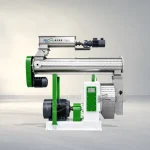
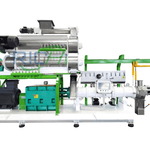

The price of a poultry feed pellet machine is influenced by more than motor power and hourly capacity. Buyers should consider the die and roller arrangement, material construction, drive system, feeding and conditioning equipment, control functions, maintenance access and the service parts required during operation. A lower initial quotation may not represent a lower cost of ownership if the machine is difficult to maintain or its wear components are expensive to replace.
A useful price comparison starts by defining the feed product and operating conditions. Poultry formulas, pellet diameters, production hours and ingredient characteristics all influence machine duty. The buyer can then compare quotations on an equivalent basis and identify which design details justify a price difference.
Clarify the machine scope behind the quoted price
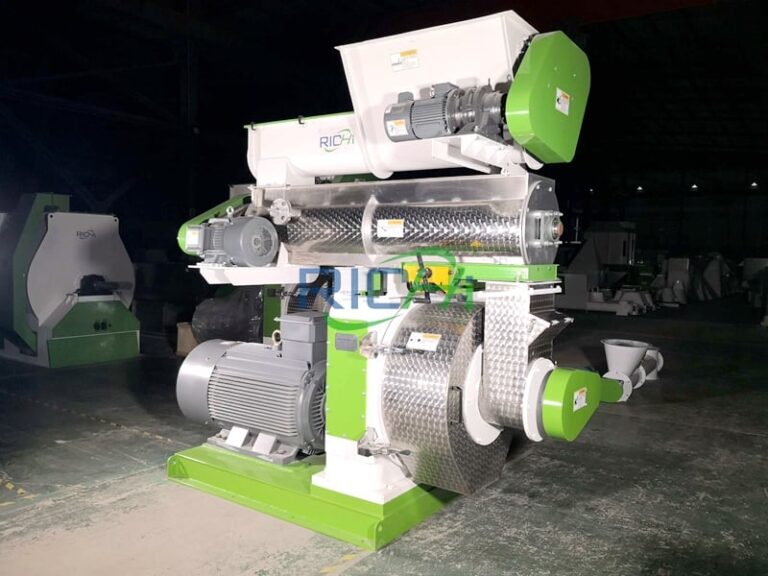
Confirm whether the quotation is for the pellet mill alone or includes a feeder, conditioner, motor, drive, control cabinet, lubrication system and safety guarding. Some suppliers quote a main machine while others include auxiliary equipment. Ask for a complete equipment list and identify optional items separately. A comparison is unreliable if one price includes conditioning and another does not.
Also confirm whether the stated capacity applies to a single machine and under what conditions. Feed formula, particle size, moisture, conditioning, pellet diameter and die specification can affect output. A nominal capacity should not be treated as a guaranteed result for every poultry feed. Request the material and product assumptions behind the supplier’s figure.
Understand the die and roller as major wear components
The die and rollers are central to the compression process and are exposed to mechanical load and abrasion. Their working life depends on material quality, heat treatment, formulation, operating conditions, adjustment and maintenance. Ask the supplier to state the die material and relevant processing information, the roller construction and the inspection method. If the supplier offers different die specifications, request an explanation of the applications for which each is intended.
Die selection should be linked to pellet diameter and the required compression behaviour. A die that is unsuitable for the formulation can increase load or make it difficult to achieve the desired pellet quality. The buyer should not choose a die solely because it has a higher compression ratio or appears more robust. It must be evaluated against the feed material and product specification.
Ask how the die is removed, how long a normal replacement takes and what lifting tools are required. The same applies to rollers and bearings. Maintenance access can affect downtime as much as the component’s theoretical life. If replacement requires extensive dismantling, the real production interruption may be much longer than the workshop repair itself.
Ask each supplier to state what the quoted price assumes about daily operating hours, feed preparation, steam quality, pellet diameter and maintenance staffing. If the assumptions do not match the factory plan, request a revised configuration before comparing prices. This prevents a low quotation from appearing attractive simply because it leaves important operating requirements outside the scope.
Compare drive and feeding arrangements
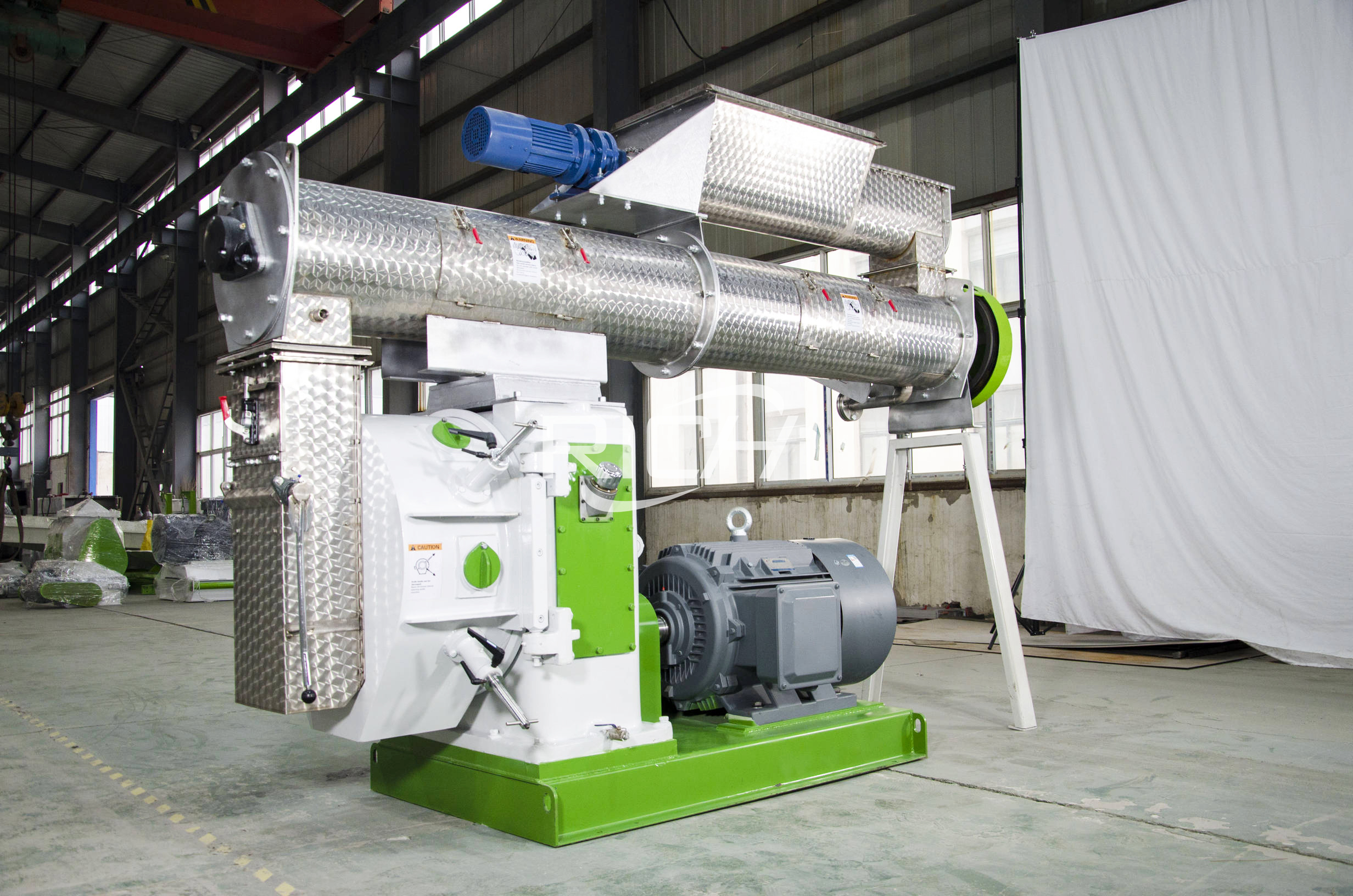
Motor power is one part of the specification, but the drive system, transmission, overload protection and feeding stability also matter. Ask for the motor rating, operating voltage, frequency, starting method and protection. Clarify whether the feeder can regulate material flow and whether the conditioner is included. Stable feeding helps prevent sudden load changes and supports consistent operation.
Conditioning may use steam to improve the feed’s processing behaviour, depending on the formulation and required product. The steam supply must be suitable for the intended duty. If the buyer’s boiler or steam system is not included, its required capacity and connection conditions should be specified. A pellet mill cannot deliver the expected process result if the upstream feed preparation is inadequate.
Estimate total cost of ownership
In addition to the purchase price, include electricity, steam or fuel, wear parts, maintenance labour, cleaning and planned downtime. Ask suppliers for the recommended inspection intervals and a spare-parts list for the expected operating hours. Obtain local prices for standard items and confirm lead times for proprietary parts. For a machine operating two shifts per day, the annual maintenance budget may be very different from a machine used intermittently.
Calculate the cost per saleable tonne rather than only the energy cost per operating hour. Divide annual machine-related costs by the quantity of acceptable pellets produced. If one machine has a lower purchase price but produces less output under the same feed conditions or requires more frequent service, its cost per tonne may be higher. The comparison should use equivalent product quality and operating hours.
Machine price comparison checklist
| Price factor | Information to request | Why it matters |
|---|---|---|
| Capacity | Material, formula, pellet size and test conditions | Confirms that output claims are comparable |
| Die and rollers | Material, construction, inspection and replacement method | Influences wear cost and downtime |
| Drive system | Motor, transmission, overload and control details | Affects operating reliability and service |
| Feeder and conditioner | Included scope, control range and steam requirements | Determines process stability and project completeness |
| Maintenance | Service intervals, tools and recommended spares | Improves lifecycle budgeting |
| Warranty and support | Coverage, exclusions, response process and parts lead time | Clarifies post-sale risk |
Review the machine’s maintainability
Inspect how operators access the die chamber, lubrication points, bearings, motor and drive. Confirm that guards can be removed safely and that there is enough clearance for lifting and replacement. Ask whether the supplier provides special tools or lifting fixtures. A well-designed maintenance arrangement should make routine inspection possible without exposing operators to moving parts.
Dust and feed residue should be considered in the layout. Cleaning access is important where different formulas are processed. Check the location of inspection doors and whether material can accumulate in inaccessible areas. If the plant has strict feed hygiene or product-separation requirements, confirm the cleaning procedure and the time needed for changeovers.
Check the supplier’s spare-parts and technical support plan
Request part numbers for dies, rollers, bearings, seals and other critical items. Clarify which parts are standard, which are made to order and which can be sourced locally. Ask how the supplier handles technical diagnosis, what information is needed for a service request and whether remote assistance is available. If the plant is in a location with long shipping lead times, initial spare-parts stock may be an important part of the purchase decision.
Warranty should be read as a defined contractual scope. Confirm its start date, covered defects, exclusions, claim procedure and responsibilities for transport or labour. A warranty does not replace routine maintenance, correct operation or the need to keep critical wear parts available. The buyer should understand both the protection provided and the conditions that must be met to retain it.
When a different machine configuration is justified
The recommendation may change if the plant needs a different pellet diameter, higher operating hours, a wider range of formulas or more demanding product quality. A change in raw materials or grinding fineness can also affect the required die and roller arrangement. If the plant is expanding, verify whether the existing grinder, mixer, boiler, cooler and packing equipment can support the additional output.
Local service capability should influence the decision. A machine with sophisticated controls may be attractive, but only if operators and maintenance staff can support it. Conversely, choosing the simplest machine may create excessive manual work or inconsistent feeding. Compare the full operating model, not a single feature.
Prepare the information needed for a firm quotation
Provide the supplier with feed formulas or ingredient ranges, target pellet diameter, required capacity, operating hours, available steam conditions, electrical supply and installation location. State whether the request is for a single machine or a complete feed production line. Ask for the equipment list, installed power, capacity basis, die details, wear-parts list, warranty terms and installation requirements.
Use the poultry feed pellet machine price information as a comparison starting point, then request a configuration matched to the actual feed and operating schedule. A useful quotation should show what is included, what is optional and which assumptions support the output estimate.
The most economical poultry feed pellet machine is not necessarily the one with the lowest initial price. It is the one that meets the required product duty, can be maintained safely, has a realistic spare-parts plan and delivers acceptable output under the buyer’s actual operating conditions. Comparing these factors before purchase makes the price decision more defensible.
Estimate changeover time as part of the price comparison
A plant making several poultry feed formulas may change pellet diameter, formulation or conditioning settings during the same shift. These changes can require cleaning, adjustment or a die replacement, depending on the product sequence and machine design. The effective production hours are therefore lower than the hours for which the shift is staffed. Ask the supplier to describe the expected changeover tasks and identify which operations can be completed safely and efficiently.
Include the expected number of changeovers in the capacity and cost model. A machine that performs well during a long continuous run may not provide the same weekly output when the factory produces many short batches. If product variety is expected to increase, confirm whether the proposed feeder, conditioner, die handling arrangement and cleaning access can support that operating pattern.
Use operating records to review the original price assumptions
After commissioning, record operating hours, tonnes produced, energy consumption where measured, die and roller service, stoppage causes and the quantity of accepted pellets. Compare these results with the assumptions used in the quotation. If actual output is lower, determine whether the cause is feed preparation, formula, conditioning, operator practice, downstream capacity or the pellet mill itself. This evidence helps the owner decide whether an adjustment, maintenance action or process upgrade is justified.
Keep the records by product type rather than combining all production into one average. Different formulas and pellet diameters may place different loads on the machine. A product-specific record makes wear patterns and operating costs easier to interpret and gives the supplier more useful information when technical support is required.
Before approving a quotation, ask the supplier to identify assumptions not included in the stated price, such as local installation, lifting tools, initial spare parts or a steam connection. Record these items beside the machine specification so that the purchase decision reflects the complete operating package. This also makes later budget changes easier to explain to the project team.
Review the price against the intended operating pattern
A single-shift plant producing one pellet size may need a different arrangement from a factory running several shifts and changing between multiple formulas. The second operation may place greater value on fast die access, reliable feeding, easy cleaning and a locally available maintenance team. The first may place more emphasis on the initial investment and straightforward operation. Neither case is automatically superior; the correct choice depends on demand, labour, product mix and the cost of an interruption.
Frequently Asked Questions About Poultry Feed Pellet Machine Price
What machine specifications have the biggest effect on poultry feed pellet mill price?
The main price factors include required capacity, motor and drive configuration, die and roller specifications, feeder, conditioner, control cabinet and included safety and lubrication systems. Compare quotations only after confirming that each supplier is pricing the same machine scope and operating duty.
Does the quoted pellet mill price include the feeder and conditioner?
Not in every quotation. Some suppliers price the pellet mill as the main machine, while others include a forced feeder, conditioner, motor, transmission, controls and lubrication system. Ask for an itemized list and identify which auxiliary equipment is optional or excluded.
How does pellet diameter affect machine selection and price?
Pellet diameter and formulation influence die-hole selection and the operating conditions required. If the plant makes several pellet sizes, ask whether separate dies are needed, how long changeovers take and whether the quotation includes additional dies and handling tools.
How should I compare the service life and replacement cost of dies and rollers?
Request the component material and construction details, inspection criteria, replacement procedure and the operating conditions behind any service-life estimate. Compare the cost of the parts together with replacement labour and production downtime. Actual service life depends on formulation, abrasive content, operating hours and maintenance.
What details should I send to obtain a reliable poultry feed pellet machine quotation?
Provide the feed type or formula range, target pellet diameter, required capacity, operating hours, raw-material moisture and particle size, available steam conditions, electrical supply and installation location. State clearly whether you need the pellet mill only or a wider feed production line.