If you’re investing in industrial-scale pellet production — whether for animal feed, biomass energy, or wood fuel — the brand of pellet mill you choose can make or break your operation. The wrong choice means costly downtime, inconsistent output, and lost revenue. The right choice means decades of reliable, high-throughput production.
This guide cuts through the noise with verified data, market share figures, and real-world performance benchmarks to help you identify the best pellet mill brand for large-scale operations.
The Global Pellet Mill Market at a Glance
Before diving into brands, it’s worth understanding how large and fast-growing this industry is:
- The global feed pellet mill machines market was valued at approximately $1.9 billion in 2024 and is projected to reach $3.5 billion by 2035, at a CAGR of 5.9%.
- The biomass pellet machine market was valued at $2.15 billion in 2025 and is expected to reach $3.68 billion by 2034, growing at a CAGR of 6.1%.
- The global wood pellet market — the primary end-product these mills produce — stood at $14.0 billion in 2024 and is forecast to hit $22.6 billion by 2033 (CAGR: 5.5%).
This explosive growth reflects surging global demand for renewable energy, high-quality animal feed, and sustainable fuel alternatives. For operators, it also means the equipment decision has never mattered more.
The Top 5 Pellet Mill Brands for Large-Scale Operations
1. CPM (California Pellet Mill) — The Industry Gold Standard
Founded: 1883
Headquarters: Waterloo, Iowa, USA
Best For: Animal feed, biomass, wood pellets, oilseed processing
CPM is unquestionably the most recognized name in industrial pellet milling. With over 140 years of engineering experience, the company has shaped modern pelletizing technology and continues to lead with landmark innovations.
Key Performance Data:
- CPM’s flagship PM9950 model delivers over 10 metric tons per hour (t/h) of throughput on softwood — one of the highest single-mill capacities commercially available.
- Their patented Twin Track Technology reduces energy consumption by an estimated 240,000 kWh per year per mill, directly lowering both operational costs and carbon footprint.
- CPM mills are engineered for 24/7 continuous operation in demanding industrial environments, with Oil Lubricated Rollers (OLR) designed to extend bearing life and maximize uptime.
Why It Wins at Scale:
CPM’s machines are built for the punishment of round-the-clock production. Their OLR system is specifically designed for high-load conditions that destroy lesser bearings. The PM9950 can handle everything from Spruce to Southern Yellow Pine — and mixtures of species — without losing consistency. Few competitors can match that kind of versatility at this throughput level.
Market Position:
CPM is consistently listed among the top three global manufacturers in industrial pellet mill market reports, with a presence across North America, Europe, and Asia-Pacific.
2. ANDRITZ — Best for Comprehensive Turnkey Solutions
Founded: 1852
Headquarters: Graz, Austria
Best For: Biomass, wood fuel, animal feed, industrial power generation
Estimated Market Share: 12–21% (varies by segment)
ANDRITZ is a global industrial powerhouse with annual revenues exceeding $3 billion in their feed and bioenergy segment alone. Their pellet mill portfolio is among the most comprehensive available, spanning biomass, feed, and wood processing.
Key Data Points:
- ANDRITZ’s PM30-6 pellet mill (introduced 2023) was specifically engineered for high-capacity biomass production, representing one of the most advanced large-scale biomass mills on the market.
- In March 2025, ANDRITZ announced a strategic partnership with Sichuan ERun to co-develop turnkey pellet mill lines across western China, targeting energy efficiency improvements of up to 20% versus conventional systems.
- ANDRITZ introduced advanced automation features in 31% of all new installations in 2024, making them the leader in smart, connected pellet mill technology.
- The company partnered with Stora Enso in 2023 for an integrated biomass conversion project at a major Finnish pulp and paper facility — a testament to their capacity for complex, industrial-scale deployments.
Why It Wins at Scale:
ANDRITZ excels at complete plant solutions. If you’re building a new facility from the ground up, their engineering teams can design, install, and commission an entire pellet production line — not just the mill itself. Their global service network across Europe and North America is also a significant advantage for operators who need fast technical support.
3. Bühler — Best for Automation & Smart Manufacturing
Founded: 1860
Headquarters: Uzwil, Switzerland
Best For: Animal feed, aquaculture, food-grade pellets, energy-efficient operations
Estimated Market Share: 18–22% (largest in feed segment)
Bühler holds the largest market share in the feed pellet mill segment — approximately 18–22% globally — thanks to its reputation for precision engineering, high efficiency, and cutting-edge automation. The company’s annual revenue exceeds $3.3 billion, funding substantial R&D investment.
Key Data Points:
- In May 2025, Bühler launched the Pellet Pro X, a new high-efficiency model designed specifically for medium-to-large industrial feed plants, featuring improved energy consumption profiles and automated maintenance systems.
- Bühler’s equipment accounted for 28% of recent product launches targeting industrial-scale operations in 2024.
- Smart manufacturing technologies integrated into Bühler mills are projected to increase productivity by up to 30% by 2030, according to ISO trend analyses.
- 39% of companies investing in pellet mill automation in 2024 prioritized Bühler-style digitalized control systems, reflecting the brand’s influence on industry best practices.
Why It Wins at Scale:
Bühler is the preferred choice for operators who prioritize data-driven production, traceability, and energy optimization. Their integrated sensors and automated maintenance scheduling minimize unplanned downtime, which is critical when running multi-shift operations. For feed producers focused on nutritional consistency and regulatory compliance, Bühler’s precision is unmatched.
4. ANDRITZ Subsidiary — Amandus Kahl — Best for European Biomass
Founded: 1876
Headquarters: Reinbek, Germany
Best For: Wood pellets, straw, agricultural residues, specialty biomass
Amandus Kahl (now part of the broader ANDRITZ/Kahl ecosystem) is renowned as a pioneer in flat-die pellet mill technology, particularly for difficult biomass feedstocks. While not as high-profile globally as CPM or Bühler, Kahl machines are widely respected in European markets.
Key Data Points:
- Kahl flat-die mills are rated for throughputs appropriate for large co-operative and regional production facilities, and are especially valued for processing straw, husks, and fibrous agricultural residues — feedstocks that challenge ring-die systems.
- Their machines are engineered to ISO standards, with a strong focus on occupational safety and energy efficiency.
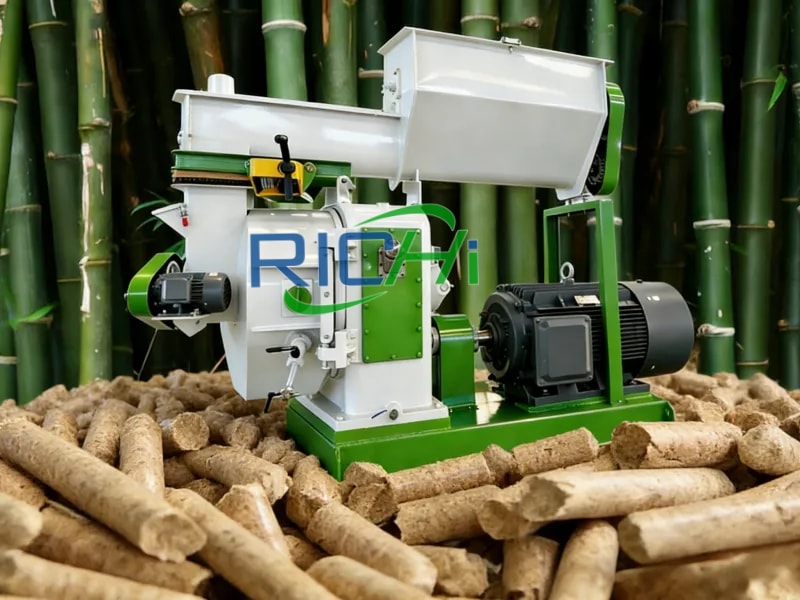
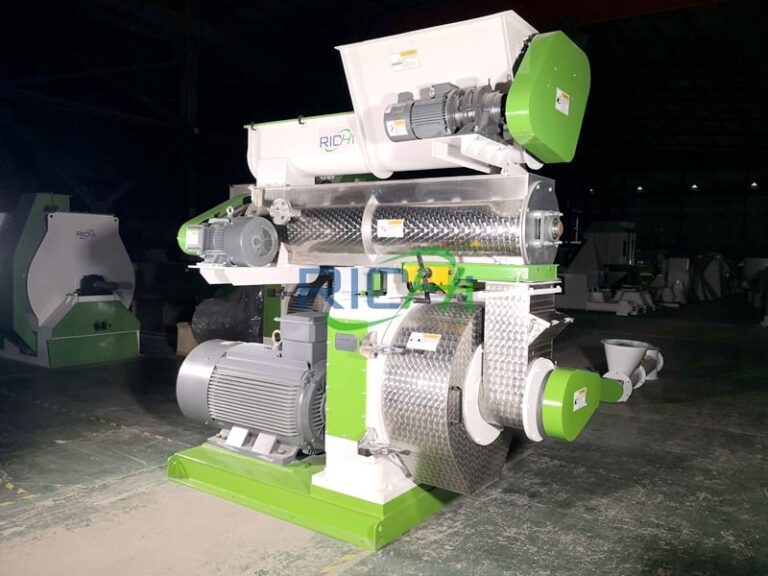
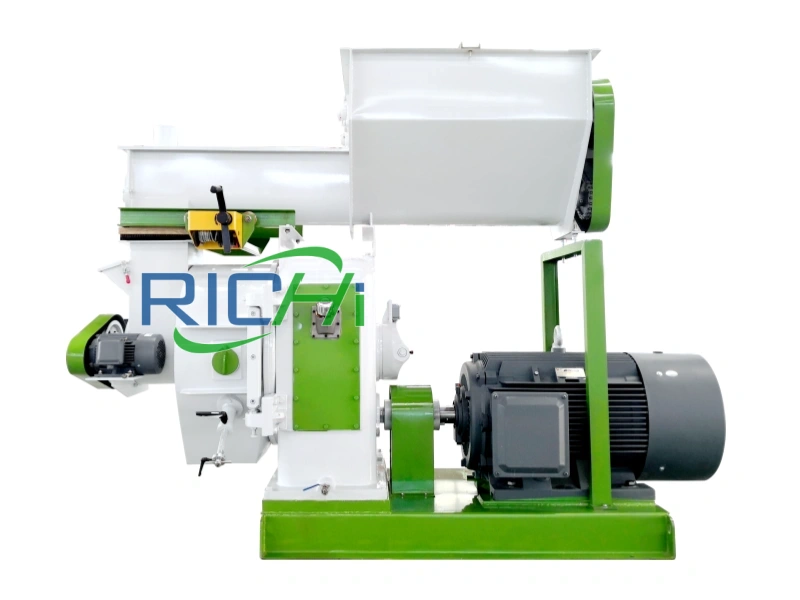
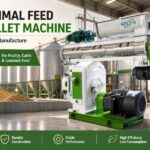
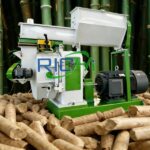
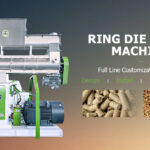
5. RICHI Machinery — Best Budget Option for High Volume
Founded: 1995
Headquarters: Zhengzhou, China
Best For: Animal feed, biomass, fertilizer pellets — emerging markets
Estimated Market Share: 11–15% (feed segment), 8–10% (biomass)
RICHI Machinery has emerged as the go-to brand for large-scale operators in Asia-Pacific, Africa, and Latin America who need industrial capacity at significantly lower capital cost.
Key Data Points:
- RICHI offers machines with capacities ranging up to several tons per hour, at price points 30–50% below comparable Western brands like CPM or Bühler.
- The company operates in 140+ countries and regions, making it one of the most globally accessible brands for buyers outside North America and Europe.
- Pellet mill machines from Chinese manufacturers as a group represent 15–20% of combined global market share, reflecting substantial real-world adoption.
Why It Wins at Scale (on a budget):
For operations where capital expenditure is a constraint but throughput requirements are high, RICHI delivers competitive output. Service and spare parts access varies by region, so buyers should verify local support infrastructure before committing.
Head-to-Head Comparison: The Numbers That Matter
| Brand | Founded | Industry Experience | Max Single-Mill Throughput | Est. Market Share | Best Industry | Price Tier |
|---|---|---|---|---|---|---|
| CPM | 1883 | 140+ years | 10+ t/h (PM9950) | Top 3 globally | Feed + Biomass | Premium |
| ANDRITZ | 1852 | 170+ years | High (PM30-6) | 12–21% | Biomass + Feed | Premium |
| Bühler | 1860 | 160+ years | High (Pellet Pro X) | 18–22% | Feed + Food | Premium |
| Amandus Kahl | 1876 | 145+ years | Mid-to-high | Niche | Biomass (EU) | Mid-Premium |
| RICHI | 1995 | 30 years | Mid-to-high | 11–15% | Feed + Biomass | Mid-Budget |
How to Choose the Right Brand for Your Operation
The “best” brand depends entirely on your specific operational context. Here’s a decision framework:
Choose CPM if:
- You need proven 24/7 industrial uptime reliability
- Your feedstock is wood (softwood or hardwood) or mixed species
- You’re in North America or Europe with access to CPM’s service network
- Energy cost reduction is a top priority (Twin Track technology)
Choose ANDRITZ if:
- You’re building a new facility and want a complete turnkey solution
- Your project is in Europe or Asia-Pacific
- You require advanced automation and digital monitoring from day one
- Biomass-to-energy is your primary application
Choose Bühler if:
- Animal feed, aquaculture, or food-grade pellets are your product
- Regulatory traceability and nutritional consistency are non-negotiable
- You’re investing in smart manufacturing infrastructure for the long term
- Your operation prioritizes energy efficiency metrics (ESG reporting, etc.)
Choose RICHI if:
- Capital expenditure is a binding constraint
- Your operation is in an emerging market with limited access to premium service networks
- You need large-scale capacity without Western brand pricing
The Bottom Line
For large-scale operations where uptime, throughput, and long-term reliability are paramount, CPM remains the industry gold standard — backed by 140+ years of engineering and innovations like the 10+ t/h PM9950 and energy-saving Twin Track technology.
For smart, automated feed production, Bühler’s 18–22% market share tells you everything: more large-scale feed operators trust Bühler than any other brand.
For complete biomass plant solutions and global reach, ANDRITZ’s $3B+ segment revenue and comprehensive engineering capabilities make it the strongest contender for greenfield projects.
The global pellet mill market is growing fast — projected from $1.9B today to $3.5B by 2035. The brands above aren’t just surviving that growth; they’re driving it. Whichever brand you choose, prioritize total cost of ownership (TCO), not just sticker price. In large-scale operations, a mill that runs 5% more efficiently over 10 years pays for itself many times over.
Sources: Global Growth Insights, WiseGuyReports, IMARC Group, Biomass Magazine, Renewable Energy Magazine, Intel Market Research, 24 Market Reports, CPM official announcements (2023–2025), ANDRITZ press releases (2023–2025), Bühler Group announcements (2025).